Instituto de Nanociencia y Materiales de Aragón
  • EspañolEspañol
Intranet
  • THE INSTITUTE
    • General information
      • Welcome
      • History of the Institute
      • Organizational chart
      • Departments
        • Department 1: Functional organic materials
        • Department 2: Materials for energy and environment
        • Department 3: Physics of materials and nanosystems
        • Department 4: Bio-nano-medicine
        • Department 5: Multifunctional magnetic materials
      • Scientific Committee
      • Annual Reports
      • Welcome Handbook
      • Associations
    • Directory
    • Location and contact
  • RESEARCH
    • Research Areas
      • Area 1: Materials for energy
        and environment (MEM)
      • Area 2: Materials for biomedicine (BIO)
      • Area 3: Materials for information
        technology (MTI)
      • Area 4: New phenomena at the
        nanoscale (NFN)
      • Area 5: Synthesis, processing and scaling
        of advanced functional materials (SPE)
      • Area 6: Singular experimental
        technologies (TES)
    • Research Groups
    • Scientific publications
    • International projects
    • INMA scientific infrastructure
    • Microdevices Engineering Technical Unit (UTIM)
      • Structure UTIM
      • Catalog UTIM
      • Capabilities UTIM
      • Applications UTIM
    • INMA large scientific facilities
    • CEQMA Scientific-Technical Services
  • TRAINING
    • Master NANOMAT
    • Degree studies
    • Master studies
    • PhD studies
    • Internships
    • Scholarships and grants
    • Course of introduction to laboratory safety -SegurINMA
    • Research career path in Spain
  • JOB OFFERS
  • DISSEMINATION
    • Activities
      • General public
      • Schools and institutes
      • Special events
        • Researchers’ Night
        • Woman and science
        • Semana de la Ciencia
          Valle de Benasque
      • Cátedra SAMCA de Nanotecnología (EN)
      • LMA
    • Projects
    • Advising and training
    • Awards and distinctions
    • Multimedia
  • TRANSFER
    • Technological offer
      • Patents
      • Capabilities for industry
    • Transferred technology
    • Spin-offs
  • EQUALITY
    • Protocols and prevention against harassment
Instituto de Nanociencia y Materiales de Aragón
  • THE INSTITUTE
    • General information
      • Welcome
      • History of the Institute
      • Organizational chart
      • Departments
        • Department 1: Functional organic materials
        • Department 2: Materials for energy and environment
        • Department 3: Physics of materials and nanosystems
        • Department 4: Bio-nano-medicine
        • Department 5: Multifunctional magnetic materials
      • Scientific Committee
      • Annual Reports
      • Welcome Handbook
      • Associations
    • Directory
    • Location and contact
  • RESEARCH
    • Research Areas
      • Area 1: Materials for energy
        and environment (MEM)
      • Area 2: Materials for biomedicine (BIO)
      • Area 3: Materials for information
        technology (MTI)
      • Area 4: New phenomena at the
        nanoscale (NFN)
      • Area 5: Synthesis, processing and scaling
        of advanced functional materials (SPE)
      • Area 6: Singular experimental
        technologies (TES)
    • Research Groups
    • Scientific publications
    • International projects
    • INMA scientific infrastructure
    • Microdevices Engineering Technical Unit (UTIM)
      • Structure UTIM
      • Catalog UTIM
      • Capabilities UTIM
      • Applications UTIM
    • INMA large scientific facilities
    • CEQMA Scientific-Technical Services
  • TRAINING
    • Master NANOMAT
    • Degree studies
    • Master studies
    • PhD studies
    • Internships
    • Scholarships and grants
    • Course of introduction to laboratory safety -SegurINMA
    • Research career path in Spain
  • JOB OFFERS
  • DISSEMINATION
    • Activities
      • General public
      • Schools and institutes
      • Special events
        • Researchers’ Night
        • Woman and science
        • Semana de la Ciencia
          Valle de Benasque
      • Cátedra SAMCA de Nanotecnología (EN)
      • LMA
    • Projects
    • Advising and training
    • Awards and distinctions
    • Multimedia
  • TRANSFER
    • Technological offer
      • Patents
      • Capabilities for industry
    • Transferred technology
    • Spin-offs
  • EQUALITY
    • Protocols and prevention against harassment
Instituto de Nanociencia y Materiales de Aragón
No Result
View All Result

Home » Researchers at INMA have developed a new strategy that enables the controlled joining and separation of molecules in DNA nanostructures

Researchers at INMA have developed a new strategy that enables the controlled joining and separation of molecules in DNA nanostructures

by INMAweb
17/08/2026
in Highlight
0
Investigadores del INMA han desarrollado una nueva estrategia que permite unir y separar moléculas de nanoestructuras de ADN de forma controlada

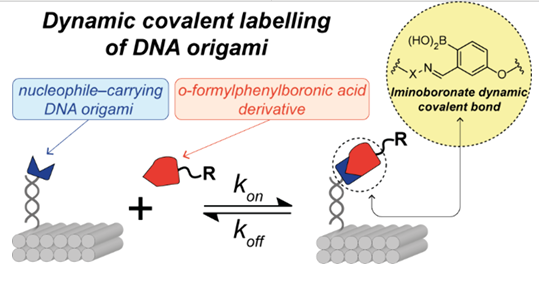
Researchers at the Aragon Nanoscience and Materials Institute (INMA), a joint centre of the CSIC and the University of Zaragoza, together with other members of the group and collaborators from Heidelberg University, have developed a new strategy that enables the controlled attachment and detachment of molecules to DNA nanostructures, opening new possibilities for designing nanodevices capable of changing and adapting to their environment.

The study, led by Silvia Hernández & Jesús del Barrio, researchers from the INMA’s CLIP group, together with other members of the team, has just been published in Journal of the American Chemical Society (JACS), one of the leading international journals in the field of chemistry, with an impact factor of 16.6.

DNA origami takes advantage of the properties of DNA to build extremely small structures with pre‑designed shapes and functions. These nanostructures can be modified by incorporating other molecules that provide new properties, something particularly relevant for future biomedical applications.

However, many of the techniques used to date generate permanent bonds. In this work, INMA researchers have developed an alternative based on dynamic covalent chemistry that functions, in simplified terms, as a kind of “chemical Velcro”: it allows specific molecules to be attached to DNA origami and subsequently removed in a controlled manner.

To achieve this, the team used iminoboronate chemistry and demonstrated that it is possible to reversibly incorporate molecules such as polyethylene glycol (PEG) or cholesterol into these nanostructures.

One of the most interesting results of the study is that the researchers also succeeded in reversibly anchoring DNA origami to lipid membranes, which share certain characteristics with the membranes surrounding our cells.

The ability to add and remove molecules from these structures without destroying them opens the door to the design of more dynamic, programmable and adaptable nanomaterials. In the long term, this type of tool could be of interest for developing new biomimetic systems and nanodevices capable of interacting in a controlled manner with biological environments.

The study, entitled Dynamic Covalent Functionalization of DNA Origami, has been published in Journal of the American Chemical Society (JACS).


Scientific publication: “Dynamic covalent functionalization of DNA origami via iminoboronate chemistry”

DOI: 10.1021/jacs.6c08320

Alejandro Postigo, Enrique Guerreiro, Joseba Ruiz, M. Sofía Navarrete-Burgos, William Verstraeten, Kerstin Göpfrich, Silvia Hernández-Ainsa, Jesús del Barrio

Journal of the American Chemical Society

Accepted, 28th July 2026
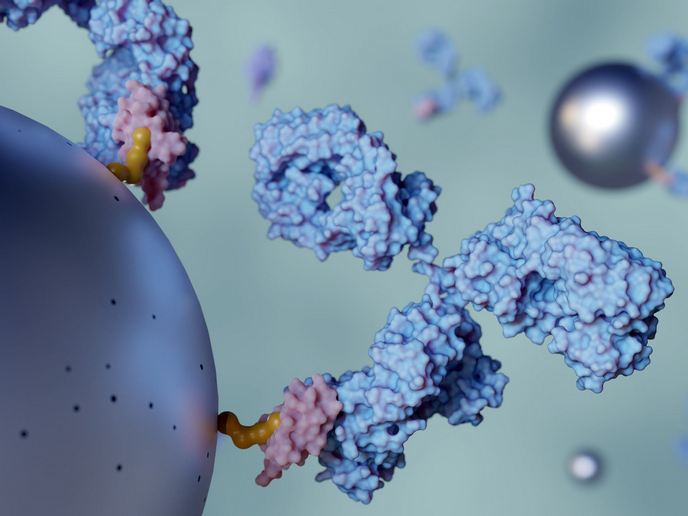
 

Figure 1

Figure 2

Previous Post

Jesús Martínez de la Fuente receives the Juan de la Cierva National Research Award for his outstanding career in knowledge transfer in the field of nanobiotechnology

Últimas noticias destacadas

  • Jesús Martínez de la Fuente receives the Juan de la Cierva National Research Award for his outstanding career in knowledge transfer in the field of nanobiotechnology
  • María José Martínez, CSIC scientist at INMA, receives the National Research Award
  • Ultrasmall platinum nanoparticles for radiation-enhanced cancer therapy

Últimas publicaciones científicas destacadas

  • Researchers at INMA have developed a new strategy that enables the controlled joining and separation of molecules in DNA nanostructures
  • Researchers at INMA develop new dyes to improve the performance of solar cells under artificial light
  • A new family of chemical products effective against antibiotic‑resistant pathogens identified

Últimas novedades

  • The ultra-thin magnetic material that could revolutionise the electronics of the future already features in the predictions of a multidisciplinary team of Spanish scientists
  • Aragon marks forty years as a leading force in the materials science that is transforming the world
  • Boost your future in nanotechnology! Applications are now open for Cátedra SAMCA de Nanotecnología scholarships for the NanoMat Master’s programme (2026–2027 academic year)

Últimas noticias de divulgación

  • INMA participates in the 4th Conference on Advanced Materials in Spain (AMatS 2025)
  • NanoAsalto and Conrado Rillo, awarded by IPFest 2025
  • Quantum film series at the Zaragoza Film Library

Bienvenida

  • Dr Anton Stasyuk
  • Dr Olga Stasyuk
  • Dr Mónica Marro

    Campus San Francisco, Facultad de Ciencias
    C/ Pedro Cerbuna, 12 – 50009 Zaragoza (España)

    Tel.:(+34) 876 55 33 22
    webmasterinma@unizar.es

    INSTITUTO DE NANOCIENCIA Y MATERIALES DE ARAGÓN, Copyright © 2022 INMA, CSIC-UZ | Aviso Legal | Política de cookies  | webmasterinma@unizar.es

    No Result
    View All Result
    • THE INSTITUTE
      • General information
        • Welcome
        • History of the Institute
        • Organizational chart
        • Departments
        • Scientific Committee
        • Annual Reports
        • Welcome Handbook
        • Associations
      • Directory
      • Location and contact
    • RESEARCH
      • Research Areas
        • Area 1: Materials for energy
          and environment (MEM)
        • Area 2: Materials for biomedicine (BIO)
        • Area 3: Materials for information
          technology (MTI)
        • Area 4: New phenomena at the
          nanoscale (NFN)
        • Area 5: Synthesis, processing and scaling
          of advanced functional materials (SPE)
        • Area 6: Singular experimental
          technologies (TES)
      • Research Groups
      • Scientific publications
      • International projects
      • INMA scientific infrastructure
      • Microdevices Engineering Technical Unit (UTIM)
        • Structure UTIM
        • Catalog UTIM
        • Capabilities UTIM
        • Applications UTIM
      • INMA large scientific facilities
      • CEQMA Scientific-Technical Services
    • TRAINING
      • Master NANOMAT
      • Degree studies
      • Master studies
      • PhD studies
      • Internships
      • Scholarships and grants
      • Course of introduction to laboratory safety -SegurINMA
      • Research career path in Spain
    • JOB OFFERS
    • DISSEMINATION
      • Activities
        • General public
        • Schools and institutes
        • Special events
        • Cátedra SAMCA de Nanotecnología (EN)
        • LMA
      • Projects
      • Advising and training
      • Awards and distinctions
      • Multimedia
    • TRANSFER
      • Technological offer
        • Patents
        • Capabilities for industry
      • Transferred technology
      • Spin-offs
    • EQUALITY
      • Protocols and prevention against harassment

    © 2026 JNews - Premium WordPress news & magazine theme by Jegtheme.

    Este sitio web utiliza cookies para que usted tenga la mejor experiencia de usuario. Si continúa navegando está dando su consentimiento para la aceptación de las mencionadas cookies y la aceptación de nuestra política de cookies

    ACEPTAR
    Aviso de cookies