• Agency of Nano‑Critics: Session Zero has continued to combat disinformation in the fields of science and technology, teaching students critical‑thinking skills and evidence‑based decision‑making.
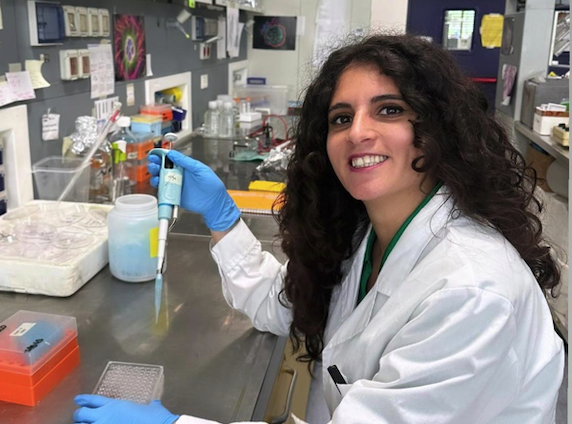
• More than 2,200 pupils from Early Years, Primary, Secondary and Sixth Form education have taken part in this edition, as well as around 170 Special Education students, through workshops and events delivered by researchers from the Aragon Nanoscience and Materials Institute (INMA, CSIC–University of Zaragoza).
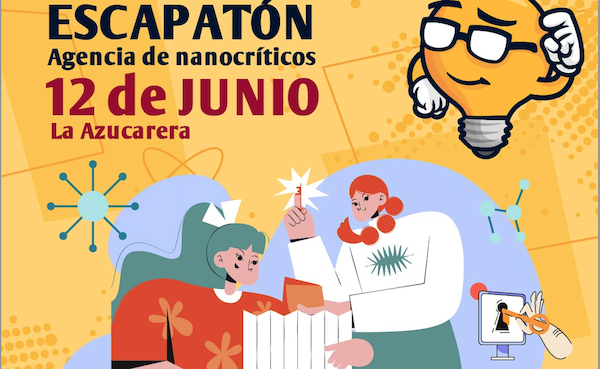
• The Escapatón brings this edition of the project to a close, organised by the Aragon Nanoscience and Materials Institute (INMA, CSIC–University of Zaragoza) with the collaboration of the Spanish Foundation for Science and Technology (FECYT) – Ministry of Science, Innovation and Universities.
Zaragoza, 9 June 2026. On Friday 12 June, La Azucarera of the Youth Service (Zaragoza Joven, Zaragoza City Council) will host the project’s final event: an in‑person activity in which students will take part in a structured day of competition and collaboration. In the morning session, teams from different schools will face a series of scientific challenges in an escape‑box format, fostering skills such as teamwork, creativity and critical thinking.
In this way, participants will apply the knowledge acquired in previous phases to solve real problems related to current INMA research. With the presentation of awards to the winning teams, this sixth edition will come to an end, having sought to combat disinformation in the fields of science and technology. The project is organised by the Aragon Nanoscience and Materials Institute (INMA, CSIC–University of Zaragoza), with the collaboration of the Spanish Foundation for Science and Technology (FECYT) – Ministry of Science, Innovation and Universities.
“Agency of Nano‑Critics”: an initiative in constant evolution
This sixth edition of Agency of Nano‑Critics: Session Zero has demonstrated the significant evolution of the initiative since its pilot project in 2017, incorporating innovative elements such as experimental kits, graphic stories and a gender perspective in the history of science. With the participation of more than 2,200 students from Early Years, Primary, Secondary and Sixth Form education, as well as around 170 Special Education pupils, this edition has adapted the project’s initial resources to the escape‑box format, transforming the learning experience into an immersive game through workshops delivered by INMA researchers.
Among the content developed within the project, a new thematic line stands out for the expansion of the “Real Game” workshops, centred on an apocalyptic future caused by an environmental disaster that is tackled through research carried out at INMA. This completes the development of all the timelines conceived for the project, which add to the graphic stories, experiential kits, online gamification activities and virtual exhibition created in previous editions and made available to participants to encourage continued use.
Furthermore, during the project a new edition of the Nano‑Critic Detector competition was held, in two categories, to promote active participation and critical analysis of information sources. A new Atomic Fake News Agency campaign was also launched on social media, aimed at promoting collaboration, reflection and critical thinking in the face of scientific disinformation.
The Escapatón: the final challenge
The edition will now conclude with the new Escapatón, to be held on Friday 12 June. Each challenge will test skills related to critical thinking, information analysis, experimentation, decision‑making and the detection of scientific fake news, using elements inspired by the different timelines and escape‑room‑style tests developed in the project. In this way, students will be able to experience the scientific method in action, preparing to work as a team and tackle complex problems creatively and in an evidence‑based manner.
10-06-2026