

Our researchers Raúl Arenal and Abhijit Roy, from the Aragon Nanoscience and Materials Institute (INMA, CSIC–University of Zaragoza) and the Laboratory of Advanced Microscopy (LMA) at the University of Zaragoza, are participating in an international study led by Gianvito Vilé’s group at the Polytechnic University of Milan (Italy) and published in the scientific journal Angewandte Chemie, providing new insights into the design of more efficient catalysts.
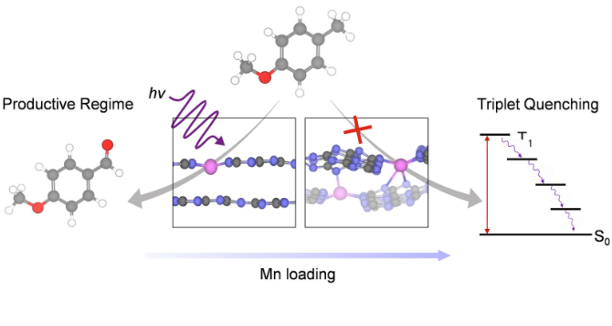
The study reveals that increasing the number of manganese atoms in certain photocatalysts does not always improve their performance, as the incorporation of Mn triggers a dynamic restructuring of these systems. Beyond a certain concentration, changes occur in the material’s structure that can reduce its effectiveness.
INMA’s contribution has been crucial to the characterisation of these materials. Raúl Arenal (an ARAID researcher at the University of Zaragoza) and Abhijit Roy, a postdoctoral researcher in Arenal’s team (the “Nanoscopy in Low-Dimensional Materials” (NLDM) research group at INMA, CSIC–UNIZAR), contributed through advanced scanning transmission electron microscopy (STEM) techniques. The analyses were carried out at the Laboratory of Advanced Microscopy (LMA) of the University of Zaragoza.
This collaboration highlights the value of advanced scientific infrastructures and their role in international research efforts that enable a deeper understanding of materials at the atomic scale.
📖 Scientific publication: Site density governs switching reactivity regimes during aerobic C–H oxidation in Mn single-atom photocatalysts
DOI: 10.1002/ange.3256491
Angew. Chem. Int. Ed. 2026, e3256491
Accepted: 3rd Sep. 2026
Viktoria Velichko, Agustín de Arriba, Areti Moutsiou, Elisabetta Inico, Andrea Olivati, Berta Pérez-Román, Jesús López-Sánchez, Ik Seon Kwon, Andrea Tonelli, Abhijit Roy, Valentina De Renzi, Raul Arenal, Annamaria Petrozza, Carlo Cavallotti, Gianvito Vilé
Abstract:
Understanding how the density of isolated metal sites affects the structure and function of single-atom catalysts remains a central challenge, particularly for photocatalysts based on polymeric semiconductors. In this study, we show that Mn incorporation in carbon nitride-supported single-atom photocatalysts (Mn1@CNx) triggers a regime transition without detectable Mn aggregation. At low-to-intermediate loadings, isolated Mn–Nx sites are accommodated within a partially delaminated CNx framework, promoting productive carrier trapping, oxygen activation, and selective aerobic benzylic C–H oxidation. Above a critical loading, however, Mn incorporation reorganizes the support into a distorted and densified architecture, modifies the Mn coordination environment, and shifts carrier dynamics toward unproductive recombination. Structural, spectroscopic, and computational analyses connect this transition to framework stacking, electronic disorder, and Mn-support coupling. During selective aerobic benzylic C–H oxidation, we show that this regime transition translates into a nonmonotonic activity response, in which additional isolated Mn sites become detrimental once support reorganization overrides the benefit of increased site density. Mechanistic experiments and theory support a photoinduced oxygen activation, with the productive regime enabled by the balance between isolated Mn sites and a favorable CNx trap-state landscape. These findings establish single-atom site density as a structural and photophysical design parameter for polymer-supported photocatalysts.


