The INMA (CSIC-UNIZAR) will develop new tools for quantum computing and quantum sensing, with a particular focus on hybrid quantum computers based on molecules.
Zaragoza, 10 September 2026. The Aragon Nanoscience and Materials Institute (INMA), a joint research centre of the Spanish National Research Council (CSIC) and the University of Zaragoza (UNIZAR), has partnered with Keysight Technologies to advance a new generation of tools for the development of quantum technologies.
This collaboration is being carried out through the High-performance Electronics for Quantum On-demand Technologies (HEQO) project, an initiative selected at national level by the CSIC Converge Programme to promote knowledge transfer between public research and industry.
Keysight is a key technology partner in tackling some of the world’s most complex engineering challenges. Its systems are used by leading companies and research centres worldwide in quantum computing. Through its Quantum Engineering Solutions division, the company develops quantum control and measurement solutions employed in some of the most advanced quantum technology programmes in the world. This collaboration brings together the cutting-edge research conducted in Zaragoza with Keysight’s expertise in advanced measurement technologies, quantum control and quantum engineering.
A win-win partnership between science and industry
The deployment of quantum technologies in fields as diverse as the design of new materials, personalised medicine, secure communications and artificial intelligence requires sophisticated electronic systems capable of controlling and reading quantum devices with the high degree of precision needed to make these applications possible.
Industry has accelerated the development of these infrastructures to meet the needs of pre-commercial-scale quantum processors, such as those launched in recent years by companies including IBM, Google and Rigetti. At the same time, research laboratories require greater flexibility to explore new architectures and applications.
HEQO was conceived precisely to bridge these two needs. While industry has developed increasingly powerful control platforms, these solutions are generally designed for standardised, large-scale quantum systems.
The project will combine INMA’s expertise in hybrid quantum devices based on molecular spins and superconducting circuits, one of the main research lines within the institute’s Severo Ochoa Centre of Excellence programme awarded in 2024, with Keysight’s innovation capabilities in advanced electronics and quantum control systems.
The objective is to explore and expand the capabilities of the company’s Quantum Control System in order to better address the evolving requirements of frontier research.
“Collaborating with INMA provides us with an opportunity to advance the capabilities of quantum control systems in support of cutting-edge research,” says Dr Eric Holland, General Manager of Quantum Engineering Solutions at Keysight. “By combining Keysight’s expertise in advanced measurement and control with INMA’s pioneering research, we are providing researchers with greater flexibility and performance to explore new experimental approaches. This work will deliver deeper insight into physical phenomena and accelerate the development of next-generation quantum technologies, providing researchers with the tools needed to explore entirely new regimes.”
Among the planned improvements are new capabilities for more flexible signal generation and acquisition, advanced hardware-level electronic control systems, and the development of software tools that make the technology easier to use for researchers and technical staff.
In addition, an intuitive graphical interface will be created to enable the seamless integration of a wide range of laboratory equipment, from cryogenic systems to superconducting magnets.
These new functionalities will be tested in experiments carried out at INMA using molecular spins coupled to superconducting circuits, one of the most promising platforms for the development of future quantum processors.
Magnetic resonance on a chip and new materials
Coordinated by Fernando Luis Vitalla, CSIC Research Professor at INMA, HEQO will be developed over the next two years through close collaboration between the scientific and technical teams of both institutions.
The project exemplifies the objective of the CSIC Converge Programme: transforming knowledge generated in research centres into innovation with economic and social impact, while strengthening Spain’s technological competitiveness in a strategic field such as quantum technologies.
Moreover, HEQO is the only selected proposal related to quantum technologies, while all other selected projects focus on artificial intelligence.
The outcomes of HEQO will have applications extending far beyond quantum computing. The tools developed will improve the sensitivity of the most advanced magnetic resonance techniques and support the development of quantum sensors capable of studying nanomaterials, biomolecules and biological processes with unprecedented precision.
The project is also expected to generate new knowledge that will contribute to the continued advancement of quantum control technologies and promote the creation of new solutions for the international scientific community.
The initiative further strengthens the position of both CSIC and INMA as leading institutions in emerging quantum technologies and demonstrates how collaboration between research centres and companies can accelerate the transfer of scientific advances to industry and society.
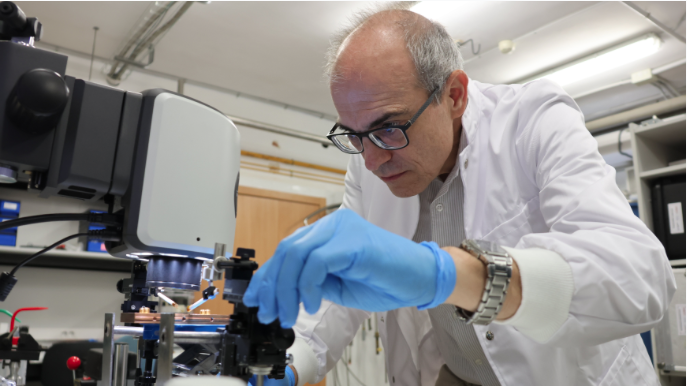
Photos (courtesy of the CSIC Delegation in Aragon)
10-09-2026