Instituto de Nanociencia y Materiales de Aragón
  • EspañolEspañol
Intranet
  • THE INSTITUTE
    • General information
      • Welcome
      • History of the Institute
      • Organizational chart
      • Departments
        • Department 1: Functional organic materials
        • Department 2: Materials for energy and environment
        • Department 3: Physics of materials and nanosystems
        • Department 4: Bio-nano-medicine
        • Department 5: Multifunctional magnetic materials
      • Scientific Committee
      • Annual Reports
      • Welcome Handbook
      • Associations
    • Directory
    • Location and contact
  • RESEARCH
    • Research Areas
      • Area 1: Materials for energy
        and environment (MEM)
      • Area 2: Materials for biomedicine (BIO)
      • Area 3: Materials for information
        technology (MTI)
      • Area 4: New phenomena at the
        nanoscale (NFN)
      • Area 5: Synthesis, processing and scaling
        of advanced functional materials (SPE)
      • Area 6: Singular experimental
        technologies (TES)
    • Research Groups
    • Scientific publications
    • International projects
    • INMA scientific infrastructure
    • Microdevices Engineering Technical Unit (UTIM)
      • Structure UTIM
      • Catalog UTIM
      • Capabilities UTIM
      • Applications UTIM
    • INMA large scientific facilities
    • Scientific-Technical Services available at the institute
  • TRAINING
    • Master NANOMAT
    • Degree studies
    • Master studies
    • PhD studies
    • Internships
    • Scholarships and grants
    • Course of introduction to laboratory safety -SegurINMA
    • Research career path in Spain
  • JOB OFFERS
  • DISSEMINATION
    • Activities
      • General public
      • Schools and institutes
      • Special events
        • Researchers’ Night
        • Woman and science
        • Semana de la Ciencia
          Valle de Benasque
      • Cátedra SAMCA de Nanotecnología (EN)
      • LMA
    • Projects
    • Advising and training
    • Awards and distinctions
    • Multimedia
  • TRANSFER
    • Technological offer
      • Patents
      • Capabilities for industry
    • Transferred technology
    • Spin-offs
  • EQUALITY
    • Protocols and prevention against harassment
Instituto de Nanociencia y Materiales de Aragón
No Result
View All Result

Home » A Marie Curie fellow advances research into new intelligent materials capable of self-organisation at the nanoscale

A Marie Curie fellow advances research into new intelligent materials capable of self-organisation at the nanoscale

by INMAweb
19/10/2026
in News
0
Una “Marie Curie” impulsa una investigación sobre nuevos materiales inteligentes capaces de organizarse a escala nanométrica

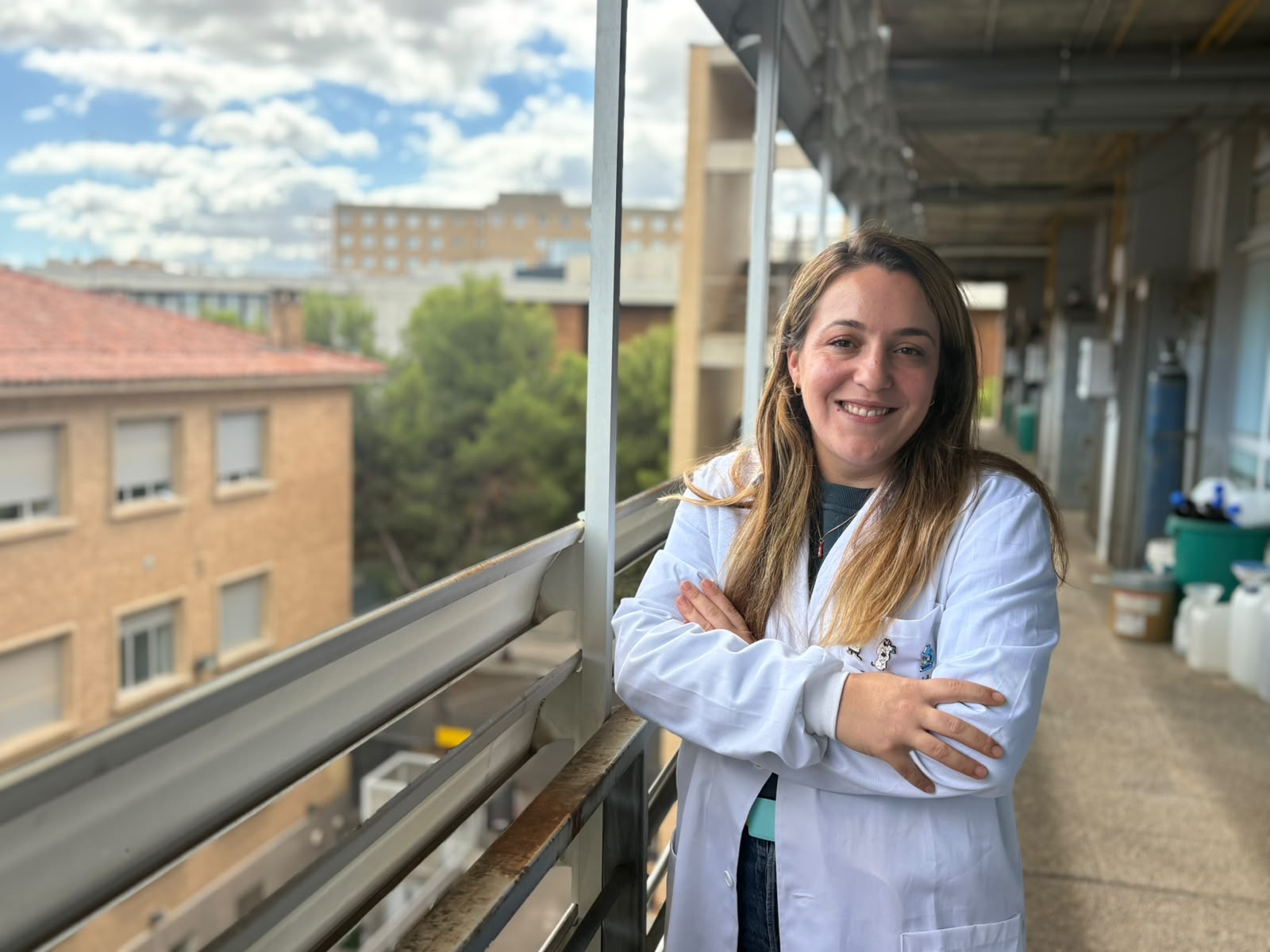
Aleksandra Mašulović, a researcher at the University of Zaragoza working at the Aragon Nanoscience and Materials Institute (INMA) (CSIC-UNIZAR), has developed the European project BCLC-TANGO, focused on creating functional soft materials from molecules capable of self-organisation.

This line of research will continue in Aragon through the COLLIVE project, funded by the Ramón Areces Foundation.


19 October 2026. Is it possible to design intelligent molecules capable of organising themselves and “dancing” with one another to form materials with entirely new properties? This is one of the questions addressed by BCLC-TANGO, a European project carried out at the Aragon Nanoscience and Materials Institute (INMA), a joint institute of the Spanish National Research Council (CSIC) and the University of Zaragoza, by researcher Aleksandra Mašulović under the supervision of Professor Blanca Ros, both researchers at the University of Zaragoza.

Funded by the European Union through a Marie Skłodowska-Curie Postdoctoral Fellowship, the project has explored new ways of creating intelligent soft materials at the nanoscale using angular-shaped molecules, known as bent-core molecules, and harnessing their ability to self-organise.

The principal researcher, Aleksandra Mašulović, chose Aragon as the place to develop a promising idea that, broadly speaking, can be compared to a molecular construction puzzle.

Rather than building a structure by assembling every component one by one, researchers design the individual building blocks so that specific interactions between them enable them to recognise one another and spontaneously arrange themselves in a predetermined way. The goal is to obtain structures with tunable properties, opening up new possibilities for the future development of functional materials.

Indeed, the full name of the project, Bent-Core Liquid Crystals & Tailored Aggregates and Nanostructures Generated Orthogonally (BCLC-TANGO), plays on the idea of a molecular self-assembly “dance”. Its overall objective has been to develop functional soft materials by exploiting different self-organisation processes of these angular molecules.

From molecules to new nanomaterials

BCLC-TANGO has covered the entire pathway from molecular design to the production and processing of a new material. The project was structured around three major objectives: designing and synthesising new molecules and controlling their self-assembly; characterising the resulting supramolecular materials and identifying their functional properties; and investigating different processing methods using both conventional and advanced techniques.

Through this approach, the research has explored a range of architectures, from liquid crystals to fibres, nanotubes, nanospheres, gels and ultrathin films, by modifying molecular design and the conditions under which the molecules organise themselves.

This versatility is particularly significant because, in these materials, the way molecules arrange themselves can determine the final properties of the material as a whole. The project investigated, among other aspects, the optical, electrical and mechanical properties, as well as the supramolecular chirality of the resulting structures.

In the long term, these materials could contribute to the development of new technologies, including sensors capable of detecting changes in their environment, optical devices that control light, more efficient displays, and materials that respond to external stimuli such as temperature or light. Furthermore, the possibility of combining these properties with 3D printing techniques opens up new opportunities for manufacturing miniaturised devices and functional components with tailor-made properties.

The research therefore combines organic synthesis, supramolecular chemistry, materials science and advanced processing techniques, including both 3D and 4D printing technologies.

International research based in zaragoza

BCLC-TANGO was carried out within the Liquid Crystals and Polymers (CLIP) research group at INMA (CSIC-Unizar). The project also included a research stay at the Institute for Molecular Systems Engineering and Advanced Materials (IMSEAM) at Heidelberg University, within the group led by Professor Eva Blasco, specifically aimed at strengthening work related to advanced materials processing.

Marie Skłodowska-Curie Actions, one of the European Union’s flagship programmes for supporting research careers, play a fundamental role in attracting scientific talent and promoting the internationalisation of research institutions. As part of the Horizon Europe programme, they fund projects that encourage international mobility, advanced training and professional development for researchers, while also fostering knowledge exchange and collaborative networks between institutions.

The completion of BCLC-TANGO does not, however, mark the end of this line of research in Zaragoza. Mašulović remains affiliated with the University of Zaragoza through INMA and, from December onwards, will join the project Dynamic Liquid Crystal Colloids with Biomimetic Actuation, Recognition and Adaptation Properties (COLLIVE), funded by the Ramón Areces Foundation and led by Alberto Concellón.

In this way, the trajectory initiated through BCLC-TANGO will continue beyond the duration of its European funding and reinforces one of the key objectives of the Marie Skłodowska-Curie Actions: promoting international mobility, advanced training and professional development for researchers while generating new research networks and opportunities. The project plan itself identified among its objectives the establishment of international collaborations, the strengthening of the researcher’s career, and the creation of new research and funding opportunities.

Severo Ochoa Centre of Excellence

The Aragon Nanoscience and Materials Institute (INMA) was the first institution in the Autonomous Community of Aragon to receive the prestigious Severo Ochoa Centre of Excellence accreditation awarded by Spain’s State Research Agency. This recognition includes funding of €4.5 million and the provision of five predoctoral contracts for the 2024–2028 period.

INMA is a joint institute of the Spanish National Research Council (CSIC) and the University of Zaragoza. With around 300 members, it currently runs more than 40 European projects and produces an average of 300 scientific publications per year, while securing approximately €7 million annually through competitive public funding programmes. In addition, it collaborates closely with industry, generating around €1 million per year through contracts and royalties.


19-10-2026

Previous Post

Lucía Gutiérrez, selected as an IEEE Magnetics Society Distinguished Lecturer for 2027-2028.

Últimas noticias destacadas

  • Lucía Gutiérrez, selected as an IEEE Magnetics Society Distinguished Lecturer for 2027-2028.
  • Jesús Martínez de la Fuente receives the Juan de la Cierva National Research Award for his outstanding career in knowledge transfer in the field of nanobiotechnology
  • María José Martínez, CSIC scientist at INMA, receives the National Research Award

Últimas publicaciones científicas destacadas

  • A 3D magnetic nanotube enables the observation of new magnetic structures at the nanoscale
  • (no title)
  • A neural network enables the design of how light propagates at the nanometre scale

Últimas novedades

  • A Marie Curie fellow advances research into new intelligent materials capable of self-organisation at the nanoscale
  • INMA Data Management Unit, recognised by the CSIC Management Awards
  • A portable device will enable soil analysis to optimise nutrient applications

Últimas noticias de divulgación

  • Nanocrític@s among the outreach projects highlighted by FECYT
  • INMA participates in the 4th Conference on Advanced Materials in Spain (AMatS 2025)
  • NanoAsalto and Conrado Rillo, awarded by IPFest 2025

Bienvenida

  • Dr Anton Stasyuk
  • Dr Olga Stasyuk
  • Dr Mónica Marro

    Campus San Francisco, Facultad de Ciencias
    C/ Pedro Cerbuna, 12 – 50009 Zaragoza (España)

    Tel.:(+34) 876 55 33 22
    webmasterinma@unizar.es

    INSTITUTO DE NANOCIENCIA Y MATERIALES DE ARAGÓN, Copyright © 2022 INMA, CSIC-UZ | Aviso Legal | Política de cookies  | webmasterinma@unizar.es

    No Result
    View All Result
    • THE INSTITUTE
      • General information
        • Welcome
        • History of the Institute
        • Organizational chart
        • Departments
        • Scientific Committee
        • Annual Reports
        • Welcome Handbook
        • Associations
      • Directory
      • Location and contact
    • RESEARCH
      • Research Areas
        • Area 1: Materials for energy
          and environment (MEM)
        • Area 2: Materials for biomedicine (BIO)
        • Area 3: Materials for information
          technology (MTI)
        • Area 4: New phenomena at the
          nanoscale (NFN)
        • Area 5: Synthesis, processing and scaling
          of advanced functional materials (SPE)
        • Area 6: Singular experimental
          technologies (TES)
      • Research Groups
      • Scientific publications
      • International projects
      • INMA scientific infrastructure
      • Microdevices Engineering Technical Unit (UTIM)
        • Structure UTIM
        • Catalog UTIM
        • Capabilities UTIM
        • Applications UTIM
      • INMA large scientific facilities
      • Scientific-Technical Services available at the institute
    • TRAINING
      • Master NANOMAT
      • Degree studies
      • Master studies
      • PhD studies
      • Internships
      • Scholarships and grants
      • Course of introduction to laboratory safety -SegurINMA
      • Research career path in Spain
    • JOB OFFERS
    • DISSEMINATION
      • Activities
        • General public
        • Schools and institutes
        • Special events
        • Cátedra SAMCA de Nanotecnología (EN)
        • LMA
      • Projects
      • Advising and training
      • Awards and distinctions
      • Multimedia
    • TRANSFER
      • Technological offer
        • Patents
        • Capabilities for industry
      • Transferred technology
      • Spin-offs
    • EQUALITY
      • Protocols and prevention against harassment

    © 2026 JNews - Premium WordPress news & magazine theme by Jegtheme.

    Este sitio web utiliza cookies para que usted tenga la mejor experiencia de usuario. Si continúa navegando está dando su consentimiento para la aceptación de las mencionadas cookies y la aceptación de nuestra política de cookies

    ACEPTAR
    Aviso de cookies