A project developed at INMA (CSIC–UNIZAR) will receive funding from the CSIC’s Activa‑T programme, which identifies research with strong innovative potential and supports its first steps towards the market
This funding will accelerate the development of this technology so that it can be applied to patients and even incorporate the controlled release of drugs directly onto the wound being treated
Zaragoza, 22 June 2026. Mussels are capable of adhering to rocks with extraordinary strength, even underwater, resisting the constant pounding of the waves. Inspired by this natural mechanism, researchers at the Institute of Nanoscience and Materials of Aragón (INMA), a joint centre of the Spanish National Research Council (CSIC) and the University of Zaragoza (UNIZAR), have spent several years developing a bioadhesive hydrogel with the potential to replace conventional sutures in wound closure. Now, thanks to funding from the CSIC Activa‑T programme, the project is entering a decisive phase: the preclinical validation of this technology, a key step towards bringing it closer to future clinical use.
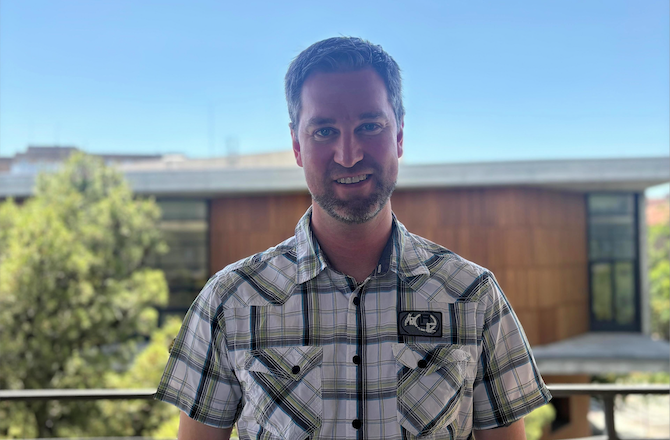
The project, called HydroBond, is led by Alexandre Lancelot, a CSIC scientist at the institute, who has been working for years on the development of bioadhesive hydrogels capable of adhering to wet tissues through chemical groups inspired by the adhesive proteins of mussels. This biomimetic approach has made it possible to obtain materials with a high adhesion capacity even in the presence of water, an essential feature for their use as an alternative to traditional sutures.
After demonstrating the material’s effectiveness in ex vivo tests on moist pig skin and in in vivo studies in mice, HydroBond is now entering a crucial stage. The new funding (€20,000 from the CSIC Activa‑T programme) will make it possible to expand preclinical trials, optimise the material and increase its technological readiness level (TRL), bringing this innovation closer to the market and to patients.
In addition to developing the adhesive, the team is investigating a new functionality that would turn the hydrogel into a therapeutic biomaterial. The researchers are attempting to incorporate systems for the local and controlled release of drugs so that the adhesive itself can deliver medication directly onto the wound while promoting healing. Early in vitro results with antibiotics are promising and open the door to devices capable of combining wound closure with infection treatment.
With this new phase, INMA (CSIC–UNIZAR) takes another step forward in transferring a technology with great potential to improve wound treatment, reduce complications associated with conventional sutures and develop new smart biomaterials for healthcare applications.
Severo Ochoa Centre of Excellence
The Aragon Nanoscience and Materials Institute is the first in our Autonomous Community to obtain the Severo Ochoa excellence accreditation, awarded by the Spanish State Research Agency. This recognition entails €4.5 million in funding and five predoctoral contracts for the 2024–2028 period. These are in addition to the ten contracts granted in the previous call, when the institute narrowly missed achieving the accreditation.
INMA is a joint institute created three years ago through the merger of two research centres of the CSIC and the University of Zaragoza, precisely with the aim of aspiring to this excellence distinction. With around 300 members, it currently manages more than 40 European projects and produces an annual average of 300 publications and €7 million obtained through competitive public programmes. It also collaborates with industry, securing around €1 million per year through contracts and royalties.
22-06-2026