Researchers from INMA (CSIC–UNIZAR) will demonstrate how, from Aragón, science is already helping nanotechnology to transform our world in strategic areas such as health, energy, water and environmental sustainability
Zaragoza, 25 May 2026. Zaragoza will host tomorrow, from 10:30 a.m. in the ETOPIA auditorium, the presentation in Aragón of the White Book of Nanotechnologies III. Building a Sustainable Tomorrow, a landmark publication that brings together the most relevant advances and current perspectives in nanotechnology as a key tool for addressing some of the major scientific, technological and social challenges of the present and the future. The event is organised by the Spanish Network of Safe and Sustainable Nanotechnologies (SustainableNano, SNSSN), in collaboration with the Aragon Nanoscience and Materials Institute (INMA), a joint institute of the Spanish National Research Council (CSIC) and the University of Zaragoza, and is open to the public.
This third edition of the White Book, already presented in Madrid and Barcelona, delves into how nanotechnology is revolutionising the way global challenges related to energy, water, the environment, agri‑food systems, medicine and information and communication technologies are being tackled. It also highlights a fundamental aspect: sustainability and the role that nanotechnologies can play in developing more efficient, less polluting solutions capable of optimising strategic resources.
The institutional opening will feature Miguel Ángel García Muro, Deputy Councillor for Digital Transformation and Transparency of Zaragoza City Council; Teresa Sierra, Director of INMA; Mª Jesús Lázaro, CSIC Institutional Delegate in Aragón; and Pedro Serena, scientist at the Institute of Materials Science of Madrid (ICMM‑CSIC), coordinator of the White Book and representative of the SustainableNano network.
Two round tables on nanotechnology and sustainability
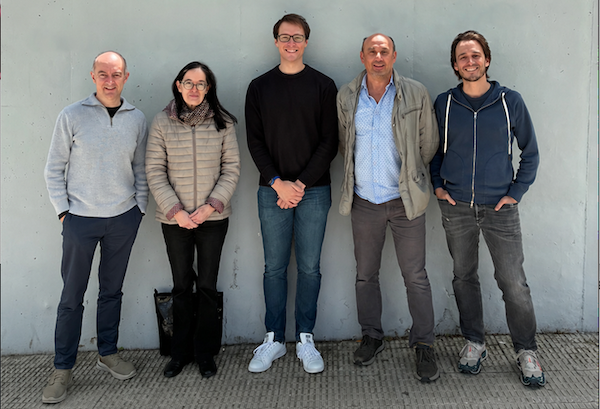
Eighty scientists from across Spain contributed to the book, eight of them from Aragón, all belonging to INMA. Six of these researchers—four from CSIC and two from the University of Zaragoza—will take part in the session to explain some of the main research lines, practical applications and future challenges of nanotechnology through two round tables.
The first round table, focused on “Nanotechnology for Energy, Health and Sustainability”, will feature José Luis Hueso, Scott Mitchell, María Sancho and Miguel Laguna, who will explain how their research and that of other scientists is already having direct applications in strategic areas for society.
José Luis Hueso, researcher at the University of Zaragoza in INMA, works on the development of advanced nanomaterials with applications in energy, photocatalysis and laser‑based manufacturing. Among his most recent lines of work is his collaboration in research in which platinum nanoparticles have succeeded in increasing the effectiveness of radiotherapy treatments against cancer, an advance that opens new possibilities for more precise and less aggressive therapies. His group also develops atomically dispersed catalysts aimed at more efficient and sustainable processes.
Scott Mitchell, CSIC scientist at INMA, will focus his contribution on the role of nanotechnology in addressing environmental challenges such as microplastics, emerging pollutants and access to quality water. He currently leads research linked to the BMRex project, aimed at developing innovative solutions to microplastic pollution, one of the environmental problems with the greatest global impact.
Researcher María Sancho, scientist at the University of Zaragoza in INMA and also a member of IIS Aragón, will discuss advances in sustainable nanomedicine and the potential of new nanotherapies in oncology. Sancho leads a prestigious European ERC grant focused on developing innovative strategies against metastasis, one of the main current challenges in the fight against cancer. Her research explores systems capable of directing treatments far more selectively towards diseased cells, reducing side effects and improving therapeutic effectiveness.
For his part, Miguel Laguna, CSIC researcher at INMA, will outline the role of nanotechnology in the energy transition through the development of new materials for green hydrogen, batteries, fuel cells and electrolysers. He is currently co‑leading Spain’s participation in the European DESIREE project, focused on developing solid‑oxide electrolysis technologies to produce green hydrogen with very high efficiency.
From the laboratory to the technologies of the future
The second round table, dedicated to “Nanotechnology, ICT and Advanced Materials Characterisation”, will bring together Pepa Martínez and Álvaro Mayoral to analyse how digitalisation, quantum computing and advanced microscopy techniques are transforming materials research.
Pepa Martínez, CSIC scientist at INMA and recent recipient of the National Research Award for Young Scientists, will explain the potential of emerging technologies such as quantum computing and reflect on the challenge of making digital development compatible with energy sustainability. Her research focuses on strategic areas such as magnetism, superconductivity and quantum computing, all key to the next technological revolution.
Álvaro Mayoral (CSIC at INMA) is a specialist in advanced electron microscopy and focuses part of his research on how new characterisation tools allow materials to be observed practically at the atomic scale. In his field, he combines advanced microscopy techniques with computational methodologies to better understand material behaviour and accelerate the development of new technological solutions in energy, health and sustainability.
The event will run from 10:30 to 12:00 at the ETOPIA Centre for Art and Technology (Avenida de la Ciudad de Soria, next to the intermodal station).
Severo Ochoa Centre of Excellence
The Aragon Nanoscience and Materials Institute (INMA) is the first in our Autonomous Community to obtain the Severo Ochoa excellence accreditation, awarded by the Spanish State Research Agency. This recognition entails funding of €4.5 million and five predoctoral contracts for the period 2024–2028.
INMA is a joint institute of CSIC and the University of Zaragoza. With around 300 members, it currently manages more than 40 European projects and produces an annual average of 300 publications and €7 million obtained through competitive public programmes. It also collaborates with industry, securing around €1 million per year through contracts and royalties.
25‑05‑2026