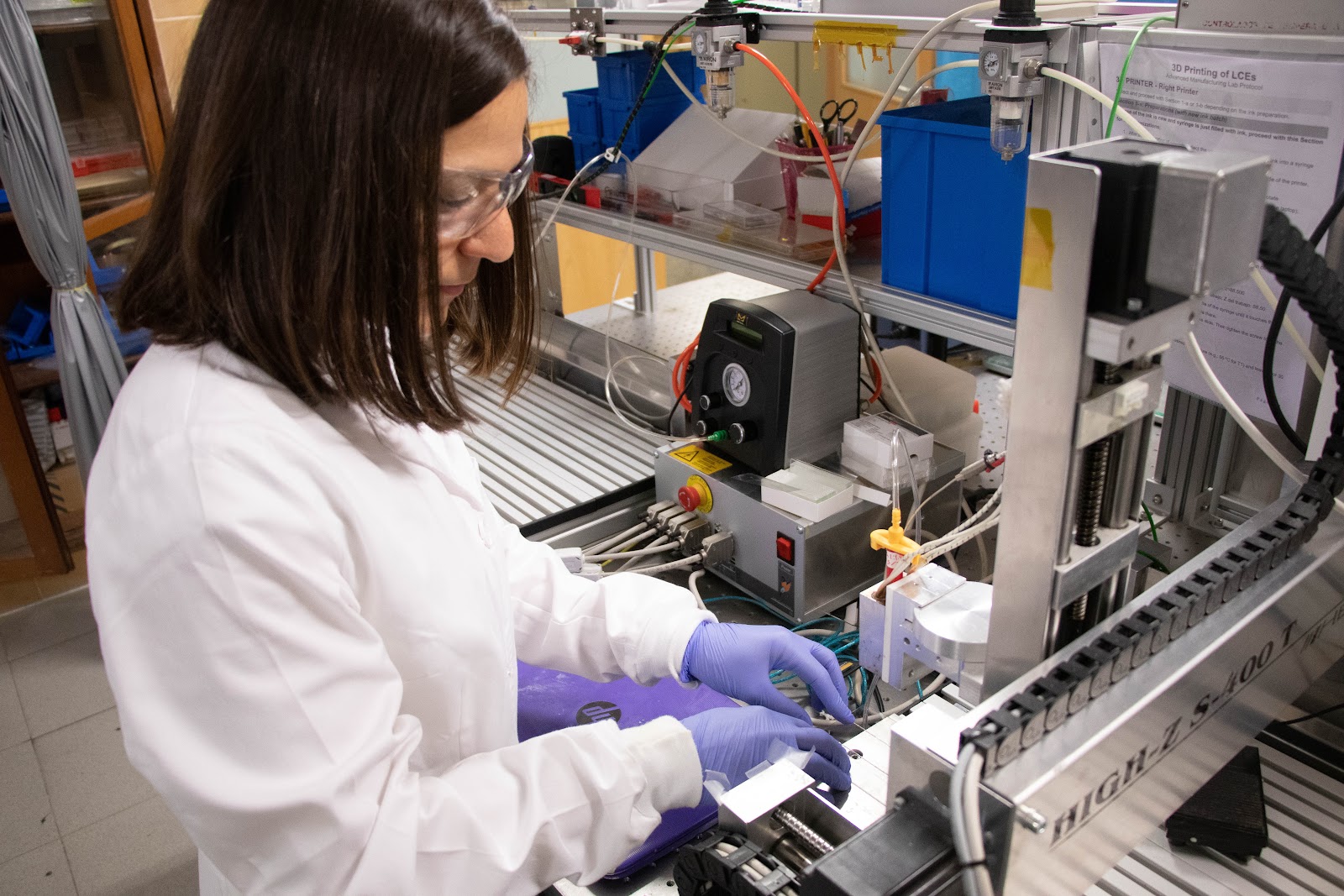
Researchers from the Aragon Nanoscience and Materials Institute (INMA, CSIC–University of Zaragoza), Raquel Royo, Raquel Andreu and Santiago Franco, in collaboration with Jesús I. Mendieta-Moreno and José Ignacio Martínez (ICMM-CSIC), have developed a new family of organic dyes for dye‑sensitised solar cells (DSSC), a technology particularly well suited to harnessing artificial light and powering low‑consumption electronic devices such as sensors or Internet of Things (IoT) equipment.
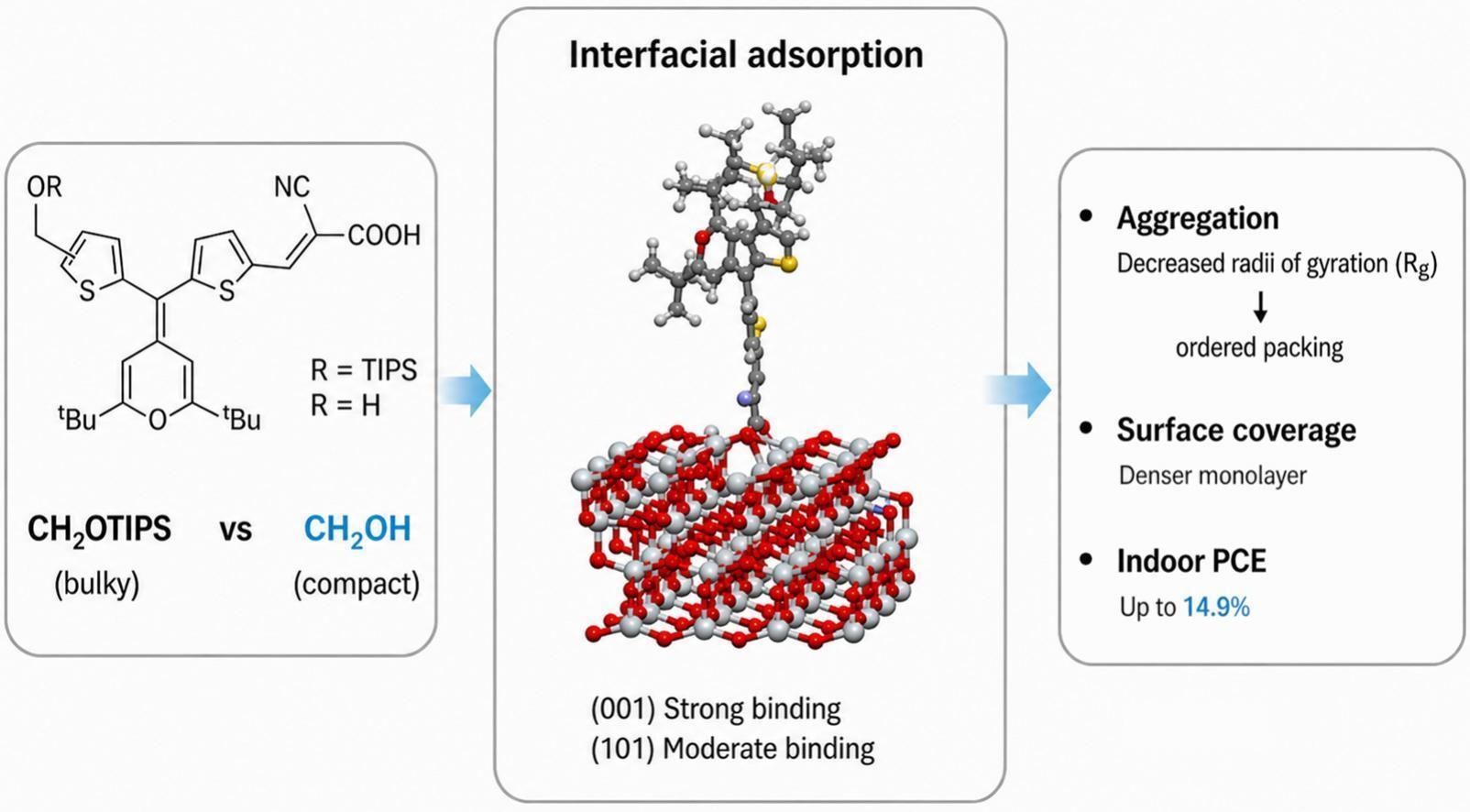
The study shows that small changes in the structure of these molecules alter the way they adsorb and organise themselves on the surface of titanium dioxide (TiO₂). This organisation is key to charge transport and, consequently, to the performance of the solar cells. The combination of experimental work and computational simulations has made it possible to explain how these structural differences influence the operation of the devices.
The solar cells developed achieve an efficiency of up to 14.9% under artificial illumination and maintain their performance for more than 1,000 hours of operation, making them an attractive alternative for powering small electronic devices without the need to replace or recharge batteries.
The results have been published in Applied Surface Science, one of the leading international journals in the field of materials and surface science.
Interfacial adsorption and aggregation of 4H-pyranylidene dyes on TiO2: experimental–computational structure–function study for indoor dye-sensitized solar cells
DOI: 10.1016/j.apsusc.2026.167469
Applied Surface Science 746 (2026) 167469, 13th June 2026
Raquel Royo, Raquel Andreu, Jesús I. Mendieta-Moreno, José I. Martínez, Santiago Franco