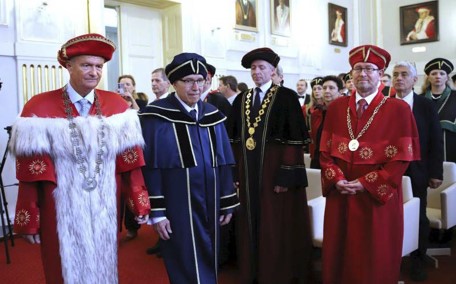
LAWRENCE R. FALVELLO, HONORARY DOCTORATE AWARDED BY PAVOL JOZEF ŠAFÁRIK UNIVERSITY IN KOŠICE (SLOVAKIA)
Professor Lawrence R. (Larry) Falvello, Professor of Inorganic Chemistry at the University of Zaragoza, has been awarded the title of Doctor Honoris Causa by Pavol Jozef Šafárik University (UPJŠ) in Košice, Slovakia. The academic ceremony took place on 21 October 2025 in the Historic Auditorium of the UPJŠ Rectorate in Košice and was presided over by Rector Daniel Pella, who presented him with the diploma and medal attesting to the distinction. The ceremony was attended by members of the UPJŠ International Council, other distinguished representatives of UPJŠ and other universities, as well as representatives of the Slovak Academy of Sciences. Numerous members of the academic community and former students of Professor Falvello were also present.
Professor Falvello is an internationally recognised expert in the fields of X-ray and neutron crystallography and coordination chemistry. For the past two decades, he has maintained a very close relationship with UPJŠ, particularly with the research group led by Professor Juraj Černák. This collaboration has included research visits, joint projects, and the training of postgraduate students.
Professor Roman Soták, Dean of the UPJŠ Faculty of Science, delivered the laudatio. He highlighted Professor Falvello’s major scientific contributions and emphasised his role as a mentor and guide to young scientists, as well as the generosity with which he has shared his knowledge and time with students and colleagues. He noted that the collaboration between the University of Zaragoza and UPJŠ, fostered through Professors Falvello and Černák, has been productive, enduring, and mutually enriching. Together, they have trained new generations of scientists, developed collaborative projects, and built bridges between the two institutions, creating an environment in which students learn to think critically, work with precision, and communicate internationally.
The UPJŠ Faculty of Science in Košice had previously awarded Professor Falvello a Bronze Medal (2013) and a Gold Medal (2018) in recognition of his contribution to the development of doctoral studies within the Faculty, his scientific cooperation, and his role in promoting UPJŠ in Spain, the United States, and other countries.
Professor Falvello expressed his deep gratitude for the honour bestowed upon him. He reflected on the early stages of his scientific career in crystallography and on how this technique has become indispensable for the structural characterisation of molecules. He also described how his scientific interests broadened over time to include the study of magnetic properties and the preparation of new compounds. He stressed the importance of collaboration between institutions and welcomed the outstanding results of his long-standing partnership with UPJŠ as an example for young scientists in their professional development.
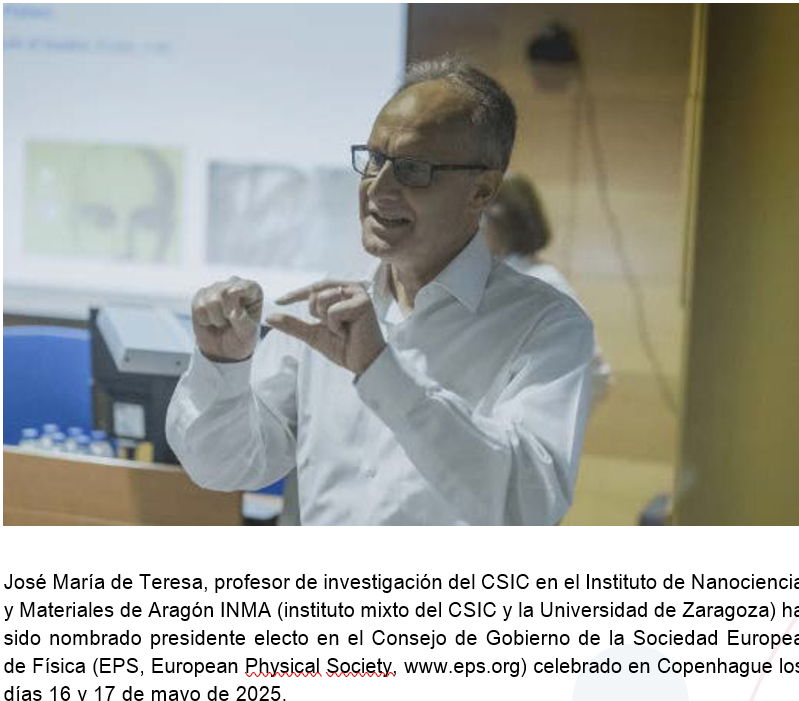
JOSÉ MARÍA DE TERESA, PRESIDENT-ELECT OF THE EUROPEAN PHYSICAL SOCIETY (EPS)
José María de Teresa, Research Professor at the Spanish National Research Council (CSIC) at the Aragon Nanoscience and Materials Institute (INMA), a joint institute of CSIC and the University of Zaragoza, has been appointed President-Elect of the European Physical Society (EPS) at the meeting of its Governing Council, held in Copenhagen on 16 and 17 May 2025.
In accordance with the Society’s customary succession procedure, De Teresa will serve on the EPS Executive Committee as President-Elect for one year. He will then assume the full responsibilities of President for a two-year term, followed by a one-year mandate as Vice-President. He will become the 27th President of the European Physical Society and the first Spaniard to hold this position. The current President is Mairi Sakellariadou (King’s College London), who will remain in office until the next EPS Governing Council meeting, scheduled for May 2026.
The European Physical Society was founded in 1968 with the aim of promoting the advancement of physics in Europe and neighbouring countries, providing both a forum for the discussion of issues of common interest and a framework through which international initiatives can be undertaken. At that time, the Second World War was still a recent memory and the Cold War was at its height. The founders of the EPS believed that a European physical society could serve as a unifying force among different countries, in a role that today might be described as a form of soft power.
The EPS brings together 42 national physical societies, including the Deutsche Physikalische Gesellschaft (DPG) in Germany, the Institute of Physics (IOP) in the United Kingdom, and the Royal Spanish Physical Society (RSEF) in Spain. It also includes several associate member institutions, such as CERN, the European Synchrotron Radiation Facility (ESRF), IBM, and the Donostia International Physics Center (DIPC), as well as individual members, representing a total membership of more than 120,000 physicists.
The Society is organised into 18 divisions and thematic groups. Between 2021 and 2024, José María de Teresa served as Chair of the Condensed Matter Division, one of the largest and most active divisions within the EPS.
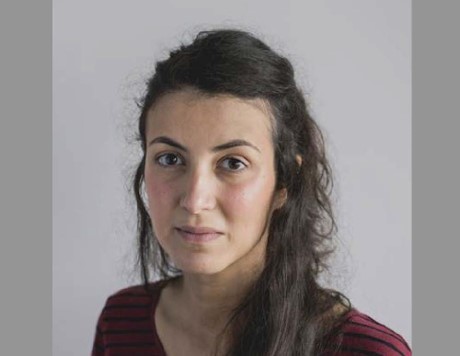
MARÍA JOSÉ MARTÍNEZ PÉREZ, PÉREZ AWARDED THE 2025 NATIONAL RESEARCH AWARD FOR YOUNG RESEARCHERS
María José Martínez Pérez has been awarded the 2025 National Research Award for Young Researchers, presented by the Spanish Ministry of Science, Innovation and Universities, in recognition of her contributions to the field of magnetism, particularly to superconductivity at the nanoscale, from an original and unconventional perspective.
The physicist from Huesca, who conducts her research at the Aragon Nanoscience and Materials Institute (INMA), a joint institute of the Spanish National Research Council (CSIC) and the University of Zaragoza, has become the first researcher from Aragón to receive this prestigious award. The prize recognises her outstanding career in advanced scientific instrumentation, her decisive contributions to research infrastructures and technology transfer, and her demonstrated scientific independence.
ROSA I. MERINO, AWARDED THE GOLD EPSILON PRIZE OF THE SPANISH CERAMIC AND GLASS SOCIETY
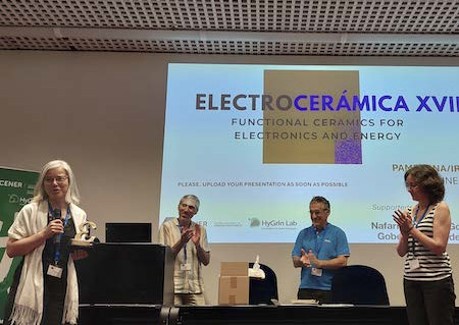
Researcher Rosa I. Merino has been awarded the Gold Epsilon Prize, a distinction presented every two years by the Electroceramics Section of the Spanish Ceramic and Glass Society to individuals or organisations that have made outstanding scientific contributions to the field of electroceramics.
The award was presented during the closing ceremony of the 17th Electroceramics Conference (Electrocerámica XVII), held in Pamplona from 25 to 27 June 2025. The prize recognises Professor Merino’s significant scientific achievements and her contribution to advancing research in electroceramic materials and technologies.
“LIQUID HELIUM MADE IN ZARAGOZA” AWARDED THE ARAGÓN INVESTIGA “RAMÓN Y CAJAL” PRIZE FOR KNOWLEDGE TRANSFER RESEARCH PROJECTS
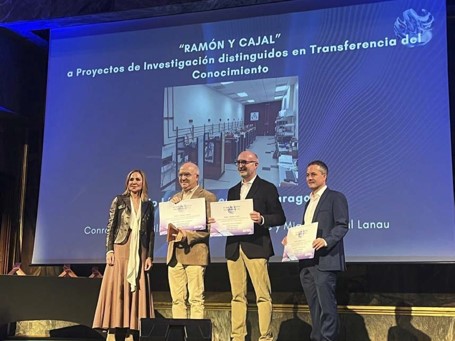
The Aragon Nanoscience and Materials Institute (INMA), a joint institute of the Spanish National Research Council (CSIC) and the University of Zaragoza, together with the General Research Support Service (SAI) of the University of Zaragoza, has been recognised at the 15th Aragón Investiga Awards Gala, which celebrates excellence in research in Aragón. The ceremony was presided over by Claudia Pérez Forniés, Regional Minister for Employment, Science and Universities.
The project “Liquid Helium Made in Zaragoza” received the Aragón Investiga “Ramón y Cajal” Prize for Knowledge Transfer Research Projects in recognition of the development and worldwide commercialisation of a pioneering technology for the efficient recovery and reliquefaction of helium. This line of work, led by researchers Conrado Rillo Millán (CSIC researcher at INMA), Javier Sesé Monclús (CSIC researcher at INMA) and Miguel Gabal Lanau (SAI, University of Zaragoza), has established Aragón as an international benchmark in sustainable helium recovery and liquid helium production technologies.
CONRADO RILLO, MEMBER OF THE ROYAL ACADEMY OF SCIENCES OF ZARAGOZA
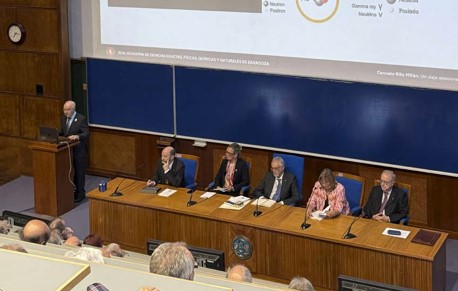
The Royal Academy of Sciences of Zaragoza held an extraordinary public session on 7 May 2025 in the Assembly Hall of the Faculty of Science for the formal admission of Conrado Rillo Millán as a full member of its Physics Section. During the ceremony, he delivered his inaugural lecture, entitled “An Exciting Journey Through Innovation: Liquid Helium Made in Zaragoza”, and received Medal Number 23. On behalf of the Academy, the response address was given by fellow academician Juan Bartolomé Sanjoaquín.
With this appointment, the Royal Academy recognises Professor Rillo’s outstanding contributions to applied physics and his role in advancing scientific and technological development from Aragón to the international stage.
Rillo is regarded as one of the leading pioneers of low-temperature physics in Spain. He played a key role in the design and construction of the first superconducting magnet developed in Spain, a milestone that helped establish the country’s ability to supply superconducting magnets and cryostats to organisations such as CERN (the European Organization for Nuclear Research) in Switzerland and other major research centres.
His work on the recovery, purification and liquefaction of helium has had a significant impact across numerous scientific disciplines. Biologists, chemists, physicists and materials scientists all rely on low-temperature environments for their research, yet until recently helium, the essential element for achieving such temperatures, was effectively a non-renewable resource. Professor Rillo’s innovations have made helium recovery possible, helping to mitigate supply shortages and expanding access to liquid helium and low-temperature physics for research laboratories as well as medical facilities using technologies such as magnetic resonance imaging (MRI) and magnetoencephalography (MEG) systems. Given that helium is both scarce and indispensable, these advances are of considerable scientific and technological importance.
JESÚS CARRETE, HONOURED BY THE ROYAL ACADEMY OF EXACT, PHYSICAL, CHEMICAL AND NATURAL SCIENCES OF ZARAGOZA
On 25 November 2025, the Royal Academy of Exact, Physical, Chemical and Natural Sciences of Zaragoza presented its 2025 Academy Research Awards in the fields of Mathematics and Physics.
In the Physics category, the award was presented to Jesús Carrete Montaña, a researcher at the Aragon Nanoscience and Materials Institute (INMA), in recognition of his scientific contributions. During the award ceremony, he gave a presentation outlining the research work that had earned him this distinction: “Ab-initio thermal transport calculations in single-crystals and beyond: a review”.
ALBERTO CONCELLÓN, WINNER OF THE INMAGINA 2025 AWARD
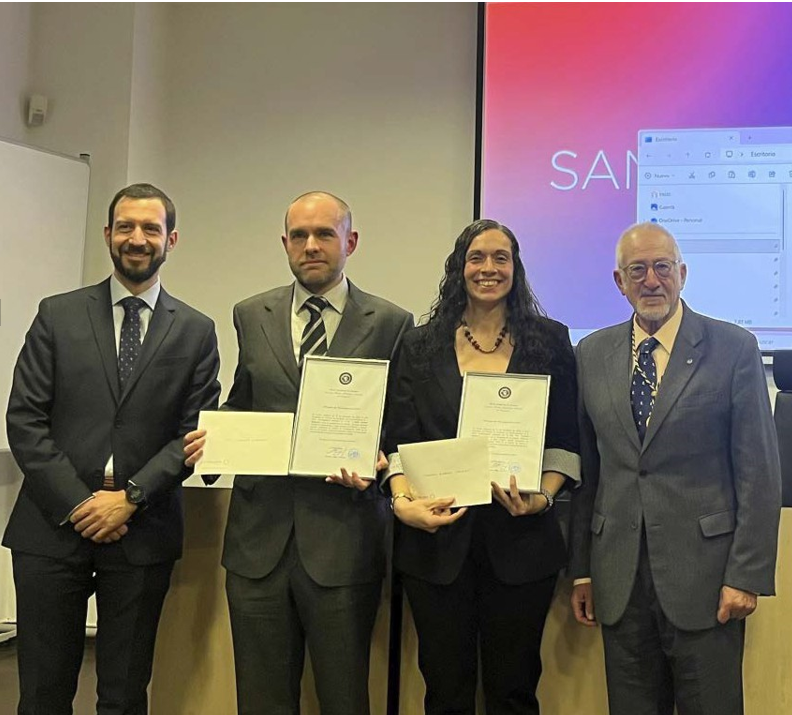
On 27 June 2025, during the 6th Nanotechnology Gala organised by the SAMCA Chair, the INMAGINA 2025 Award was presented to Alberto Concellón Allueva for his project “Portable Optical Detection of PFAS in Water Using Liquid Crystal Emulsions (SENDROPS)”.
Alberto proudly received the award, which recognises his outstanding work in the development of innovative solutions for the detection of water contaminants. His project contributes to advances in applied nanotechnology and promotes environmental sustainability through the creation of portable and efficient technologies for monitoring water quality.
INMA, acreditación Severo Ochoa a la Excelencia Científica
El Instituto de Nanociencia y Materiales de Aragón (INMA), Instituto Universitario mixto del Consejo Superior de Investigaciones Científicas (CSIC) y la Universidad de Zaragoza (UNIZAR), fue propuesto para la acreditación de centro de excelencia Severo Ochoa en la resolución provisional de 21 de marzo de la Agencia Estatal de Investigación. Con esta acreditación, el Ministerio de Ciencia, Innovación y Universidades busca impulsar la investigación científico-técnica y su transferencia a la sociedad, reconociendo a aquellos centros de investigación en España que destacan como referentes en su campo de especialización.
El director científico de la propuesta, Luis Martín Moreno, Profesor de Investigación del CSIC, ha expresado su satisfacción por esta acreditación, que refleja la excelencia del INMA, tanto en la investigación como en su gestión. El proyecto presentado ofrece un enfoque integrador que traslada la investigación en nanomateriales a los retos de la sociedad actual. Basado en las fortalezas del INMA en nanofabricación, caracterización avanzada y estudio de nuevos fenómenos en la nanoescala, el proyecto científico aborda investigación de excelencia en:
- i) Tecnologías de captura de CO₂ y su revalorización.
- ii) Uso de nanomateriales para el tratamiento del cáncer de páncreas y la prevención de enfermedades infecciosas multirresistentes.
- iii) Utilización de efectos cuánticos en materiales y dispositivos para el desarrollo de sensores y para el procesado de información.
El INMA es el primer instituto en Aragón que recibe esta acreditación. Este reconocimiento supone una financiación de 4.500.000 euros y la dotación de 15 contratos predoctorales. Este reconocimiento permite atraer talento y reforzar los resultados y el impacto de la investigación que se desarrolla en el INMA, ser más visibles en el ámbito internacional y proyectar Aragón al exterior.
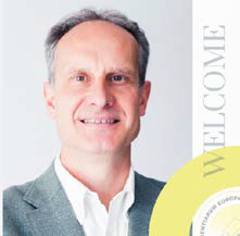
José María de Teresa, Miembro Distinguido (Fellow) de la Academia de Ciencias Europea (EurASc) – División de Materiales
José María de Teresa, profesor de investigación del CSIC en el Instituto de Nanociencia y Materiales de Aragón (INMA), ha sido nombrado Fellow de la Academia Europea de Ciencias (EurASc). Con esta distinción, EurASc pretende reconocer a José María de Teresa como uno de los mejores científicos europeos en el área de ciencia de materiales, además de promover un desarrollo social y económico de Europa basado en el conocimiento.
EurASc es una asociación internacional de académicos distinguidos, con sede en Bruselas y totalmente independiente, que entre sus objetivos busca reforzar la ciencia y la cooperación científica europea y aprovechar la experiencia de sus miembros en el asesoramiento a otros organismos europeos para la mejora de la investigación europea, la aplicación tecnológica y el desarrollo social.
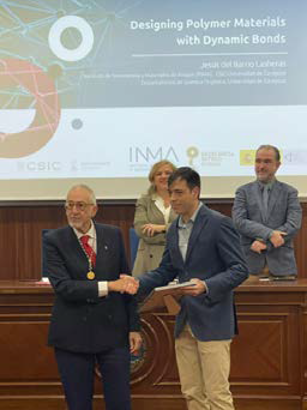
Jesús del Barrio Lasheras, Premio Academia de Investigación – Sección Químicas 2024
Jesús del Barrio Lasheras, investigador del INMA y profesor del Departamento de Química Orgánica en la Universidad de Zaragoza, recibió el 28 de noviembre el Premio Academia de Investigación 2024 (otorgado por la Real Academia de Ciencias Exactas, Físicas, Químicas y Naturales de Zaragoza) y presentó sus actividades recientes en la frontera entre los biomateriales y la química covalente dinámica.
María Moros, Premio Joven Investigador de la Real Sociedad Española de Química (RSEQ)
La Real Sociedad Española de Química (RSEQ) ha concedido el Premio Joven Investigador en la modalidad Líder de Grupo a la Dra. María Moros Caballero, investigadora del CSIC en el INMA. La RSEQ quiere reconocer con este premio a María Moros por su trayectoria como líder de un nuevo grupo de investigación.
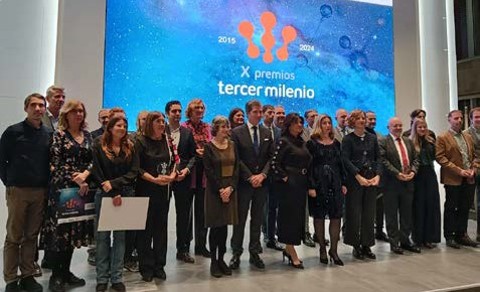
Irene Lucas y Carlos Pobes, Galardonados con Sendos Accésits a la Divulgación en Aragón (Premios Tercer Milenio 2024)
Los investigadores del INMA Irene Lucas y Carlos Pobes recibieron el lunes 25 de noviembre sendos accésits al premio por el cortometraje documental ‘Cazando lo invisible’ y unas guías didácticas que llegaron a institutos de localidades de menos de 5.000 habitantes y la Agencia de Nanocrític@s para combatir la desinformación en el ámbito de la ciencia.
El proyecto Agencia de Nanocrític@s, liderado por Irene Lucas, está basado en el uso del método científico para resolver situaciones problemáticas que se presentan con temas atractivos para las edades a las que están enfocadas. Es un proyecto de divulgación orientada a estudiantes desde edades de infantil hasta bachillerato que lleva funcionando 6 años mediante financiación FECYT. Incluye talleres, vídeos, escape rooms y el Nanocuento para público de 3 a 6 años.
Por su parte, el investigador Carlos Pobes recogió el Accésit al Premio junto a Mirella Abrisqueta (directora del documental y de Sintregua). El documental de 50 minutos (con versión reducida de 25 minutos para institutos) aborda la búsqueda de materia oscura e incluye investigaciones desde el CERN al Polo Sur, pasando por el Laboratorio Subterráneo de Canfranc o el Observatorio Astrofísico de Javalambre.
Alberto Concellón receives the Aragón Research Award for Young Researchers “Blanca Catalán de Ocón”
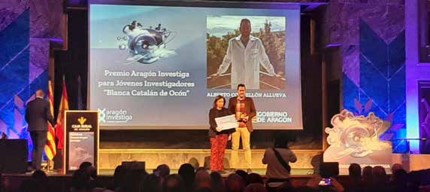
Alberto Concellón holds a PhD in Chemistry from the University of Zaragoza and was awarded the Extraordinary Doctoral Award for the 2017-2018 academic year. He has extensive expertise at the interface between organic and supramolecular chemistry, as well as in various areas of materials science.
For four years, he worked as a postdoctoral researcher in the Department of Chemistry at the Massachusetts Institute of Technology (MIT). This work resulted in six scientific publications and three patents, some of which are currently being commercially exploited. Subsequently, he was awarded a J-WAFS Solutions Grant, funded by the multinational company Xylem, which specialises in water technologies.
He was also awarded a Marie Skłodowska-Curie Fellowship, was selected for a María Zambrano grant aimed at attracting research talent, and in 2023 obtained a Ramón y Cajal research position at the University of Zaragoza to develop his own research line within the Liquid Crystals and Polymers (CLIP) Research Group at the Aragon Nanoscience and Materials Institute.
José María de Teresa named Fellow of the European Physical Society for significant contributions to Physics
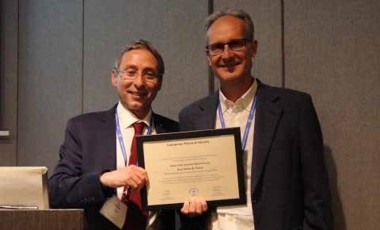
José María de Teresa, a CSIC researcher at the Aragon Nanoscience and Materials Institute (INMA), a joint institute of CSIC and the University of Zaragoza, has been named a Fellow of the European Physical Society (EPS) in recognition of his significant contributions to the field of physics and his service to the scientific community as Chair of the EPS Condensed Matter Division since 2021.
The distinction of EPS Fellow is an honorary recognition awarded annually following an assessment of nominated candidates by the EPS Executive Committee and the subsequent vote of the Society’s Council. As noted on the Society’s website, previous Spanish physicists to have received this distinction include Lluis Torner, Ángel Rubio, and Víctor Velasco, while Nobel Prize laureates such as Claude Cohen-Tannoudji have also been honoured with this title.
In the case of José María de Teresa, the distinction was awarded in recognition of the impact of his research on advancing the understanding of electrical transport in magnetic and superconducting materials at the nanoscale, as well as for his commitment and service to the scientific community through the European Physical Society.
The European Physical Society (EPS) was founded in 1968 in Geneva, Switzerland, with the aim of disseminating advances in physics and promoting European collaboration in the discipline, thereby contributing to greater cultural unity across Europe. Today, the Society comprises 42 national physical societies (including the Royal Spanish Society of Physics), representing more than 120,000 members. Each year, it awards Fellowship status to members who have made significant contributions to a field of physics and/or rendered distinguished service to the EPS.
Luis Martín Moreno, admitted to the Royal Academy of Exact, Physical, Chemical and Natural Sciences of Zaragoza
On 25 May 2022, Luis Martín Moreno, a CSIC researcher at the Aragon Nanoscience and Materials Institute (INMA, CSIC-UNIZAR), delivered his inaugural address upon admission to the Royal Academy of Exact, Physical, Chemical and Natural Sciences of Zaragoza, entitled: “Artificial Intelligence Applied to Science: Basic Concepts and Examples”.
Luis Martín Moreno obtained his PhD from the Autonomous University of Madrid, with research focused on the electronic properties of amorphous semiconductors. Following a period at the University of Cambridge (United Kingdom) and a postdoctoral appointment at the Institute of Materials Science of Madrid (ICMM), he co-authored, in 2001, the first theoretical paper on Extraordinary Optical Transmission (EOT) through arrays of holes in metallic films. Since then, his principal research activity has focused on the field of nanophotonics.
In 2010, he began working on two new research lines: quantum electrodynamics in waveguides and graphene nanophotonics. He subsequently launched a research programme on topological effects in nanophotonics. More recently, he has started working on the application of Artificial Intelligence to scientific problems.
Luis Martín Moreno has published more than 260 papers in international journals, and his work has been cited more than 30,500 times. In 2016, he received the Thomson Reuters Award in recognition of being one of the world’s most highly cited scientists.
In addition, he is a frequent contributor to science outreach activities and has organised events such as the first International Conference on Surface Plasmon Photonics, the biennial international workshops on Nanophotonics and Quantum Nanophotonics at the Benasque Centre for Science, and the lecture series “Nanophotonics of 2D Materials”.
Regarding his current leadership roles, he is the Principal Investigator of the “Quantum Materials and Devices” Research Group of the Government of Aragon and, since 2020, has served as Deputy Director of the Aragon Nanoscience and Materials Institute.
The Royal Academy of Exact, Physical, Chemical and Natural Sciences of Zaragoza is a regional academy dedicated to promoting and advancing study and research in mathematics, physics, chemistry and the natural sciences, as well as fostering activities that bring science closer to the people of Aragon.
The Academy’s usual activities include lectures and presentations by its members and invited experts, the promotion and support of national and international conferences, and above all the encouragement of research through the Research Awards it grants annually and through its publications. Its full members have included prominent figures in Aragonese and Spanish science, such as Zoel García de Galdeano, Pedro Ramón y Cajal, Antonio de Gregorio Rocasolano, Manuel Martínez-Risco, Pedro Ayerbe Allué, Juan Bastero Lerga, Longinos Navás Ferrer, Antonio Lasierra Purroy, Manuel Lorenzo Pardo, Justiniano Casas Peláez and Luis Oro Giral, among others.
Distinguished Career Award granted by the Royal Spanish Society of Chemistry 2022
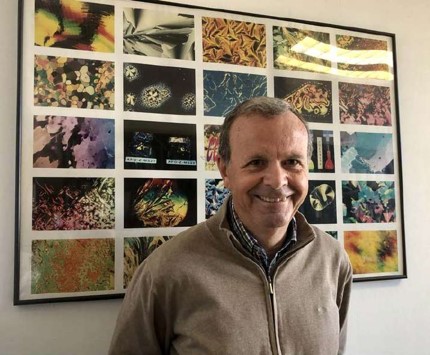
José Luis Serrano, a researcher at the University of Zaragoza and the Aragon Nanoscience and Materials Institute (INMA, UNIZAR-CSIC), has received the Distinguished Career Award granted by the Royal Spanish Society of Chemistry, “in recognition of his outstanding and sustained scientific career over time.”
This award adds to a number of distinctions that José Luis Serrano has received in recent years, including the Aragón Research Award 2006, the Ben Sturgeon Lectureship (2010), awarded by the British Liquid Crystal Society (LCS), the Freedericksz Medal (2017) awarded by the Russian Liquid Crystal Society, and the recent Alfred Saupe Award 2022, granted by the German Liquid Crystal Society and the Alfred Saupe Foundation.
Professor José Luis Serrano obtained both his degree and doctorate from the University of Zaragoza and was appointed Professor of Organic Chemistry at the same university in 1996. Since 1984, he has led the Liquid Crystals and Polymers (CLIP) Research Group.
The group has achieved national and international recognition through the development of several pioneering research lines in the field of liquid crystals (LCs), including ferroelectric and antiferroelectric liquid crystals, metallomesogenic compounds, photosensitive liquid-crystal polymers, liquid-crystal supramolecular complexes, functional liquid crystals, and, more recently, nanostructured dendrimer materials for biomedical applications.
To date, Professor Serrano has supervised 32 doctoral theses in these research areas and is the author of more than 400 scientific papers that have received over 11,000 citations. He is also the inventor of six patents (five international and one national) and has presented his scientific results in eight plenary lectures and 36 invited talks at conferences.
The Professor of Organic Chemistry continues to lead the Liquid Crystals and Polymers (CLIP) Research Group, which enjoys strong international recognition thanks to its pioneering research activities.
70th Lindau Nobel Laureate Meeting
Elena Atrián Blasco, a researcher at the Aragon Nanoscience and Materials Institute (INMA), has been selected to participate in the prestigious 70th Lindau Nobel Laureate Meeting in Germany, which brings together young scientists and Nobel Prize laureates from different disciplines. Held annually, the meeting aims to foster exchange and dialogue among researchers from different generations, cultures and scientific fields.
Around 70 Nobel Prize laureates take part in the event, gathering to meet the next generation of scientific leaders: approximately 600 undergraduate students, doctoral candidates and postdoctoral researchers from across the world.
The meetings focus in turn on the three Nobel Prize disciplines in the natural sciences: Physiology or Medicine, Physics and Chemistry. Every five years, an interdisciplinary meeting is held covering all three natural science disciplines. In addition, the Lindau Meeting on Economic Sciences takes place every three years.
The scientific programme of each Lindau Meeting includes lectures, panel discussions, master classes and poster sessions. The event also features Nobel Laureate science walks with young scientists, discussion forums and a variety of networking opportunities.
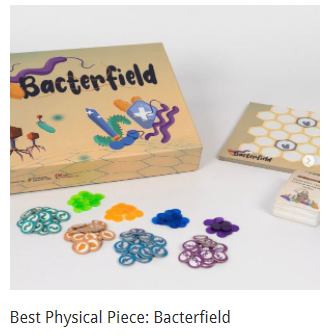
Best Physical Piece del concurso #MicrobeArt2021
The board game Bacterfield received an award as an innovative project in the field of microbiology outreach in the #MicrobeArt2021 competition, which is held annually to commemorate Microorganisms Day.
The #MicrobeArt competition is organised each year by the Federation of European Microbiological Societies (FEMS).
Honourable Mention in the Science Communication in Aragon category of the Heraldo de Aragón Third Millennium Awards
El proyecto de divulgación Bacterfield, que engloba el desarrollo de un juego de mesa destinado a la divulgación de la microbiología y todos los proyectos y actividades surgidas a partir del proyecto principal, recibió el accésit por su contribución a la divulgación científica en Aragón en el año 2021.
Best Thesis Award of the Spanish Microscopy Society (SME) 2021
Mario Peláez Fernández and Javier Pablo Navarro, both doctoral researchers at the Aragon Nanoscience and Materials Institute (INMA), a joint research centre of the Spanish National Research Council (CSIC) and the University of Zaragoza, have received two of the Spanish Microscopy Society (SME) awards for the best doctoral theses defended during the 2019-2021 period.
The thesis by Javier Pablo Navarro (Best Thesis Award in Materials Science), entitled “Development and Optimisation of 3D Advanced Functional Magnetic Nanostructures Grown by Focused Electron Beam Induced Deposition”, was supervised by Professor José María de Teresa and Dr César Magén, both researchers at INMA. This work combined focused electron beam nanofabrication techniques with transmission electron microscopy nancharacterisation to design and optimise three-dimensional ferromagnetic nanowires for applications in spintronics, magnetic memories and magnetic sensors. The research has received several national and international awards, including the American Physical Society (APS) Magnetism Division’s Award for the Best Doctoral Thesis in 2019 and, more recently, the Best Thesis Award in Nanoscience and Nanotechnology, granted in 2021 by Campus Iberus and the SAMCA Chair of the University of Zaragoza.
The thesis by Mario Peláez Fernández (Best Thesis Award in Technical and Technological Developments), entitled “Optoelectronic Properties and In-Situ Transformations of 1D and 2D Materials Studied by Transmission Electron Microscopy”, was supervised by Dr Raúl Arenal, an ARAID researcher. The work carried out within this thesis focused on the study of the optoelectronic properties and structure of various nanomaterials using different transmission electron microscopy techniques. In some cases, these materials underwent transformations that were monitored in situ within the microscope.
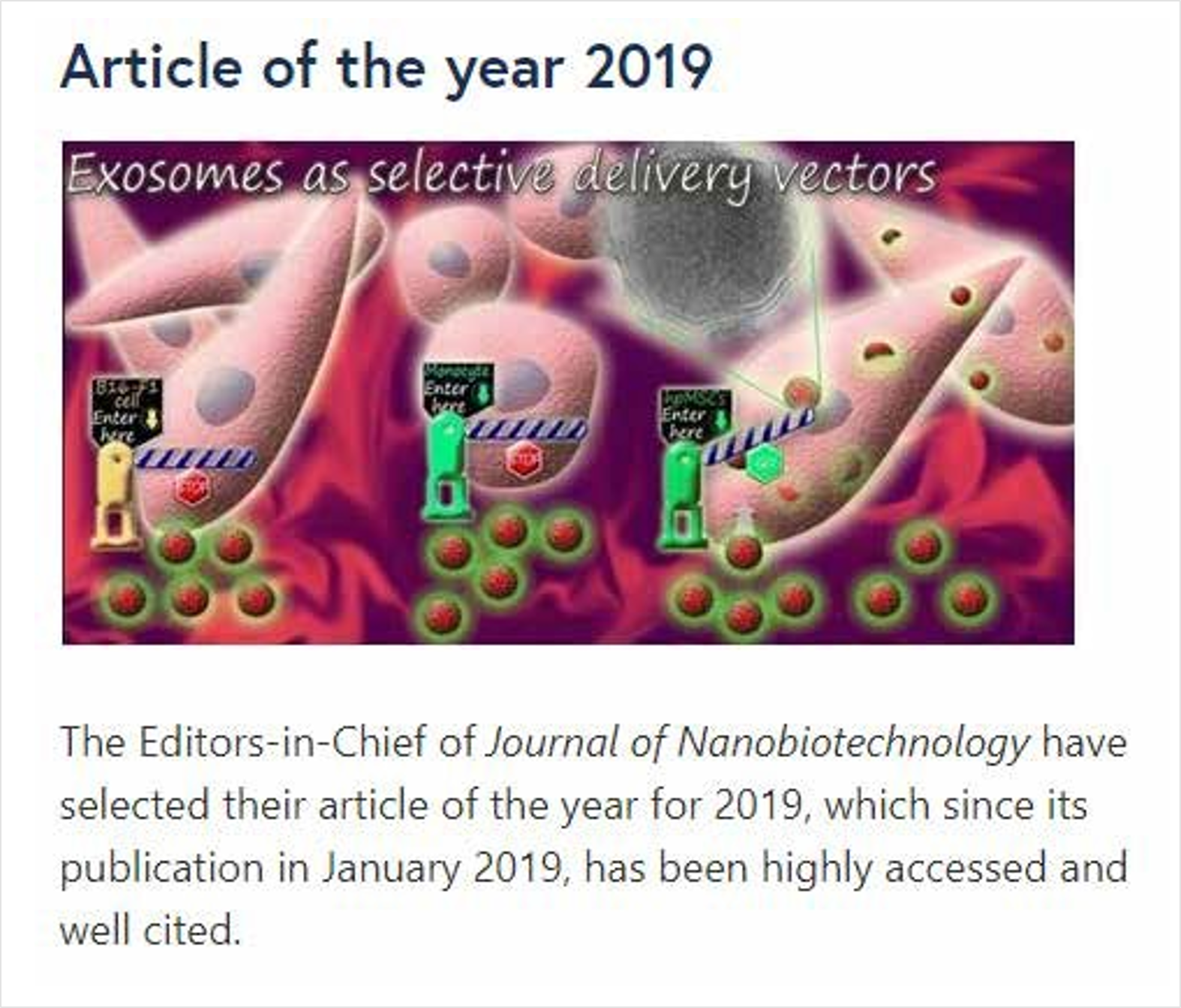
ARTICLE OF THE YEAR JOURNAL OF NANOBIOTECHNOLOGY
The journal Journal of Nanobiotechnology awarded the “Article of the Year 2019” prize last March to the scientific article: “Exosome origin determines cell targeting and the transfer of therapeutic nanoparticles towards target cells”. Sancho-Albero, M, Navascues, N., Mendoza, G., Sebastian, V, Arruebo, M., Martin-Du-que, P., Santamaria, J. Journal of Nanobiotechnology, 17 (1), 16, 2019. IF: 5,345
LARRY FALVELLO, NEW MEMBER OF THE AMERICAN CRYSTALLOGRAPHIC ASSOCIATION (ACA)
Professor of Inorganic Chemistry at the University of Zaragoza and researcher at the Aragon Nanoscience and Materials Institute (INMA), Lary Falvello, was elected as a new Fellow of the American Crystallographic Association (ACA).
MARÍA JOSÉ MARTÍNEZ PÉREZ RECEIVES THE 2020 YOUNG RESEARCHER AWARD IN EXPERIMENTAL PHYSICS
María José Martínez Pérez, an ARAID researcher at the Aragon Nanoscience and Materials Institute (INMA), has been awarded the 2020 Young Researcher Award in Experimental Physics, presented jointly by the Royal Spanish Physics Society (RSEF) and the BBVA Foundation.
The judging panel highlighted her significant contributions to the field of nanomagnetism. In particular, she has developed a new generation of magnetic sensors that are more sensitive and versatile, enabling her to investigate nanomaterials of interest in the fields of molecular magnetism and quantum computing.