Instituto de Nanociencia y Materiales de Aragón
  • EspañolEspañol
Intranet
  • THE INSTITUTE
    • General information
      • Welcome
      • History of the Institute
      • Organizational chart
      • Departments
        • Department 1: Functional organic materials
        • Department 2: Materials for energy and environment
        • Department 3: Physics of materials and nanosystems
        • Department 4: Bio-nano-medicine
        • Department 5: Multifunctional magnetic materials
      • Scientific Committee
      • Annual Reports
      • Welcome Handbook
      • Associations
    • Directory
    • Location and contact
  • RESEARCH
    • Research Areas
      • Area 1: Materials for energy
        and environment (MEM)
      • Area 2: Materials for biomedicine (BIO)
      • Area 3: Materials for information
        technology (MTI)
      • Area 4: New phenomena at the
        nanoscale (NFN)
      • Area 5: Synthesis, processing and scaling
        of advanced functional materials (SPE)
      • Area 6: Singular experimental
        technologies (TES)
    • Research Groups
    • Scientific publications
    • International projects
    • INMA scientific infrastructure
    • Microdevices Engineering Technical Unit (UTIM)
      • Structure UTIM
      • Catalog UTIM
      • Capabilities UTIM
      • Applications UTIM
    • INMA large scientific facilities
    • CEQMA Scientific-Technical Services
  • TRAINING
    • Master NANOMAT
    • Degree studies
    • Master studies
    • PhD studies
    • Internships
    • Scholarships and grants
    • Course of introduction to laboratory safety -SegurINMA
    • Research career path in Spain
  • JOB OFFERS
  • DISSEMINATION
    • Activities
      • General public
      • Schools and institutes
      • Special events
        • Researchers’ Night
        • Woman and science
        • Semana de la Ciencia
          Valle de Benasque
      • Cátedra SAMCA de Nanotecnología (EN)
      • LMA
    • Projects
    • Advising and training
    • Awards and distinctions
    • Multimedia
  • TRANSFER
    • Technological offer
      • Patents
      • Capabilities for industry
    • Transferred technology
    • Spin-offs
  • EQUALITY
    • Protocols and prevention against harassment
Instituto de Nanociencia y Materiales de Aragón
  • THE INSTITUTE
    • General information
      • Welcome
      • History of the Institute
      • Organizational chart
      • Departments
        • Department 1: Functional organic materials
        • Department 2: Materials for energy and environment
        • Department 3: Physics of materials and nanosystems
        • Department 4: Bio-nano-medicine
        • Department 5: Multifunctional magnetic materials
      • Scientific Committee
      • Annual Reports
      • Welcome Handbook
      • Associations
    • Directory
    • Location and contact
  • RESEARCH
    • Research Areas
      • Area 1: Materials for energy
        and environment (MEM)
      • Area 2: Materials for biomedicine (BIO)
      • Area 3: Materials for information
        technology (MTI)
      • Area 4: New phenomena at the
        nanoscale (NFN)
      • Area 5: Synthesis, processing and scaling
        of advanced functional materials (SPE)
      • Area 6: Singular experimental
        technologies (TES)
    • Research Groups
    • Scientific publications
    • International projects
    • INMA scientific infrastructure
    • Microdevices Engineering Technical Unit (UTIM)
      • Structure UTIM
      • Catalog UTIM
      • Capabilities UTIM
      • Applications UTIM
    • INMA large scientific facilities
    • CEQMA Scientific-Technical Services
  • TRAINING
    • Master NANOMAT
    • Degree studies
    • Master studies
    • PhD studies
    • Internships
    • Scholarships and grants
    • Course of introduction to laboratory safety -SegurINMA
    • Research career path in Spain
  • JOB OFFERS
  • DISSEMINATION
    • Activities
      • General public
      • Schools and institutes
      • Special events
        • Researchers’ Night
        • Woman and science
        • Semana de la Ciencia
          Valle de Benasque
      • Cátedra SAMCA de Nanotecnología (EN)
      • LMA
    • Projects
    • Advising and training
    • Awards and distinctions
    • Multimedia
  • TRANSFER
    • Technological offer
      • Patents
      • Capabilities for industry
    • Transferred technology
    • Spin-offs
  • EQUALITY
    • Protocols and prevention against harassment
Instituto de Nanociencia y Materiales de Aragón
No Result
View All Result

Home » The DESIREE project will promote the production of green hydrogen for a decarbonised future

The DESIREE project will promote the production of green hydrogen for a decarbonised future

by INMAweb
04/03/2026
in News
0
El proyecto DESIREE impulsará la producción de hidrógeno verde para un futuro descarbonizado

A new European research initiative is developing high-efficiency electrolysis technologies to produce renewable hydrogen from water in a more sustainable, cost-effective and efficient way, using advanced and responsible approaches to reduce CO₂ emissions.

The project, coordinated by CENER, brings together a European consortium of ten partners and two affiliated entities, including, on the Spanish side, the Spanish National Research Council and the University of Zaragoza through a team from the Institute of Nanoscience and Materials of Aragon (INMA, a joint CSIC-Unizar centre).

Hydrogen, the most abundant element in the universe, is an excellent energy carrier capable of storing and supplying energy in a clean and versatile way. However, it is rarely found in isolation and must be produced from compounds such as water or hydrocarbons. According to the International Energy Agency’s (IEA) Global Hydrogen Review 2023 report, only about one per cent of global hydrogen production currently comes from low-emission sources, as most of it is obtained from fossil fuels through processes that release large amounts of carbon dioxide. Increasing renewable hydrogen production is therefore essential to decarbonise sectors such as heavy industry, long-distance transport and large-scale energy storage.

The DESIREE project (acronym for ‘Development of Enhanced SOEL Components for Improved Reliability and Endurance’, or Development of Enhanced SOEL Components for Improved Reliability and Endurance) addresses this challenge by advancing solid oxide electrolysis (SOEL) technology, which produces hydrogen by separating water into hydrogen and oxygen through high-temperature electrolysis. When powered by renewable electricity, this process generates hydrogen without carbon dioxide emissions.

Scheduled to run from January 2026 to June 2029, DESIREE will design, build and validate a 40-kilowatt prototype system based on state-of-the-art stack technologies and focused on its optimisation, integration and operational performance at the system level. The project will demonstrate how high-temperature electrolysis, combined with thermochemical hydrogen compression, can enable the direct supply of pressurised hydrogen in a single integrated system. Overall efficiency is expected to exceed 85%, representing an improvement of more than 15% over current electrolysis technologies.


Setting a new technological benchmark

Although current SOEL systems already offer high efficiency, they present challenges related to long-term durability, energy consumption and operation under variable renewable energy conditions. DESIREE will address these challenges through innovations across the entire system, from materials and components to system design and control.

The project, coordinated by CENER, brings together a European consortium of 10 partners and 2 affiliated entities. The main focus is on improving the performance and sustainability of solid oxide electrolysers through innovation at different levels of research.

At the materials level, the aim is to improve the performance and durability of cells and stacks (the basic repetitive units of an SOEL system) through various complementary research activities, including: (i) the development of advanced electrodes enhanced with nanomaterials, (ii) the integration of highly durable glass-ceramic sealing systems, and (iii) recycling critical raw materials such as nickel, cobalt, lanthanum and strontium, as well as reintegrating them into the cell manufacturing process, along with additional developments in materials aimed at improving long-term stability, reducing operating temperature and ensuring compatibility with system-level integration.

At the system level, DESIREE will integrate a modular, compartmentalised design that will improve efficiency and simplify maintenance, recovering and reusing heat through advanced heat exchangers to compress hydrogen without additional electricity consumption. Advanced control and power electronics strategies will also be developed to ensure effective and efficient integration with renewable energies.


Towards a sustainable and inclusive energy future

DESIREE is a key step towards cleaner and more resilient energy systems. By promoting scientific innovation, sustainable design and circular manufacturing, it will help accelerate the adoption of clean hydrogen solutions for industry, transport and energy storage.

“DESIREE directly supports the objectives of the European Green Deal, the Fit for 55 package and the Clean Hydrogen Partnership, contributing to the European Union’s commitment to reduce greenhouse gas emissions by at least 55% by 2030 and achieve a fully decarbonised economy by 2050,” said project coordinator Iñigo Garbayo, head of the Hydrogen Area of CENER’s Network Integration Department.

With a total budget of close to €4 million, the project is supported by the Clean Hydrogen Partnership and co-funded by the European Union under the Horizon Europe programme.


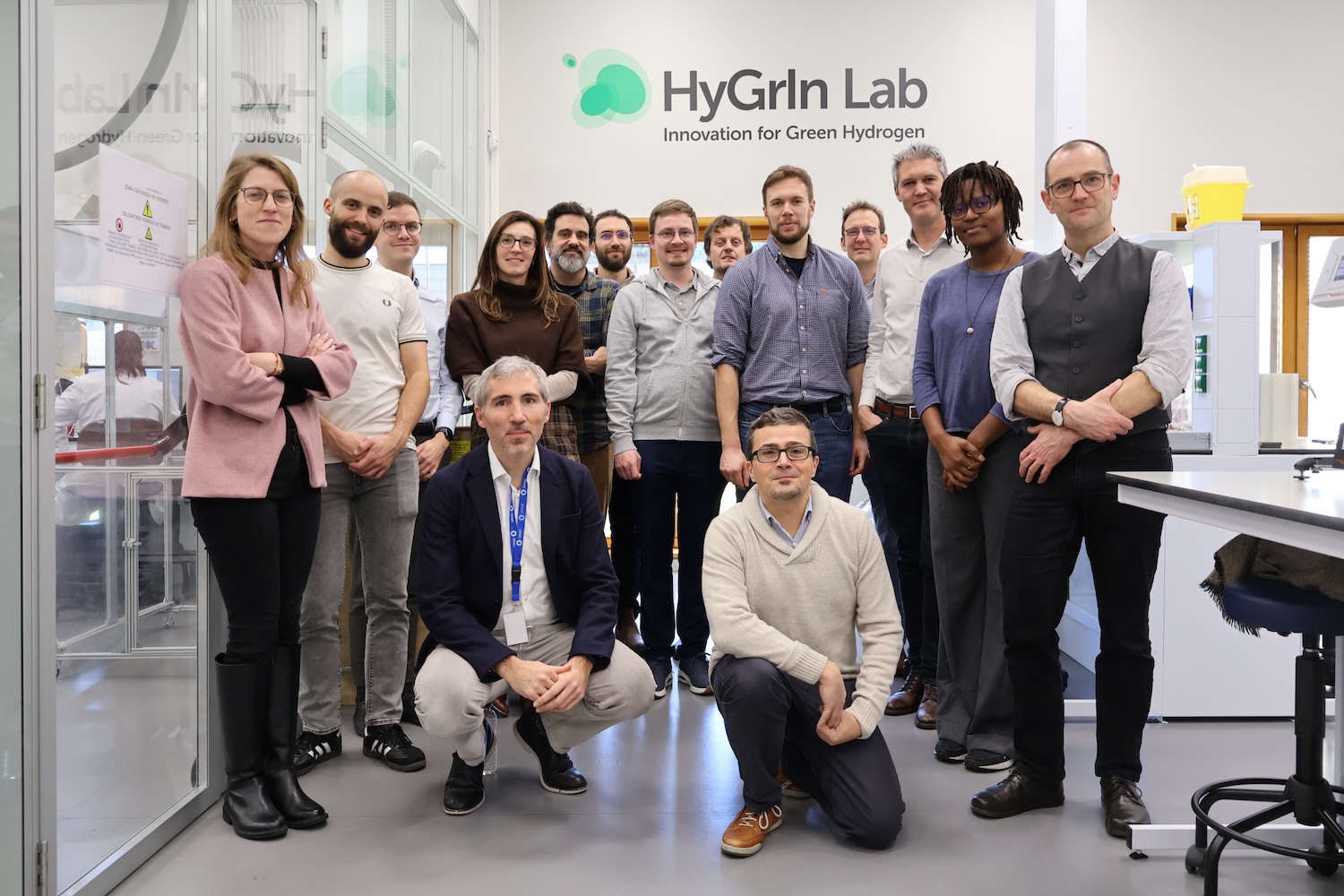
Photo: The DESIREE team during the project launch meeting in January 2026.


Contact information: 

  • Project coordination:
    • Íñigo Garbayo: igarbayo@cener.com
  • Communication:
    • Mariano Echávarri: mechavarri@zabala.es
    • Ana Báscones: abascones@zabala.es


04-03-2026
Previous Post

First meeting of the RUVERTEX project, with Joaquín Coronas as principal investigator at INMA

Últimas noticias destacadas

  • INMA participates in a fundamental breakthrough in the design of new multifunctional materials for biomedical and high-tech applications
  • INMA is recognised for developing its globally impactful helium technology
  • INMA researcher Jesús Carrete receives award from the Royal Academy of Exact, Physical, Chemical, and Natural Sciences of Zaragoza

Últimas publicaciones científicas destacadas

  • New liquid crystal microactuators with programmable shape changes and adaptive optics
  • New nanostructured microgels with dynamically reconfigurable morphologies
  • Cell-driven encapsulation of chlorophyllin-based carbon dots within exosomes for enhanced photodynamic therapy: miRNA profiling reveals mechanistic insights

Últimas novedades

  • The DESIREE project will promote the production of green hydrogen for a decarbonised future
  • First meeting of the RUVERTEX project, with Joaquín Coronas as principal investigator at INMA
  • INMA reinforces its commitment to transfer at Foro Transfiere

Últimas noticias de divulgación

  • INMA participates in the 4th Conference on Advanced Materials in Spain (AMatS 2025)
  • NanoAsalto and Conrado Rillo, awarded by IPFest 2025
  • Quantum film series at the Zaragoza Film Library

Bienvenida

  • Dr Mónica Marro
  • Prof. Mónica Burriel
  • Dr Cristina Momblona

    Campus San Francisco, Facultad de Ciencias
    C/ Pedro Cerbuna, 12 – 50009 Zaragoza (España)

    Tel.:(+34) 876 55 33 22
    webmasterinma@unizar.es

    INSTITUTO DE NANOCIENCIA Y MATERIALES DE ARAGÓN, Copyright © 2022 INMA, CSIC-UZ | Aviso Legal | Política de cookies  | webmasterinma@unizar.es

    No Result
    View All Result
    • THE INSTITUTE
      • General information
        • Welcome
        • History of the Institute
        • Organizational chart
        • Departments
        • Scientific Committee
        • Annual Reports
        • Welcome Handbook
        • Associations
      • Directory
      • Location and contact
    • RESEARCH
      • Research Areas
        • Area 1: Materials for energy
          and environment (MEM)
        • Area 2: Materials for biomedicine (BIO)
        • Area 3: Materials for information
          technology (MTI)
        • Area 4: New phenomena at the
          nanoscale (NFN)
        • Area 5: Synthesis, processing and scaling
          of advanced functional materials (SPE)
        • Area 6: Singular experimental
          technologies (TES)
      • Research Groups
      • Scientific publications
      • International projects
      • INMA scientific infrastructure
      • Microdevices Engineering Technical Unit (UTIM)
        • Structure UTIM
        • Catalog UTIM
        • Capabilities UTIM
        • Applications UTIM
      • INMA large scientific facilities
      • CEQMA Scientific-Technical Services
    • TRAINING
      • Master NANOMAT
      • Degree studies
      • Master studies
      • PhD studies
      • Internships
      • Scholarships and grants
      • Course of introduction to laboratory safety -SegurINMA
      • Research career path in Spain
    • JOB OFFERS
    • DISSEMINATION
      • Activities
        • General public
        • Schools and institutes
        • Special events
        • Cátedra SAMCA de Nanotecnología (EN)
        • LMA
      • Projects
      • Advising and training
      • Awards and distinctions
      • Multimedia
    • TRANSFER
      • Technological offer
        • Patents
        • Capabilities for industry
      • Transferred technology
      • Spin-offs
    • EQUALITY
      • Protocols and prevention against harassment

    © 2026 JNews - Premium WordPress news & magazine theme by Jegtheme.

    Este sitio web utiliza cookies para que usted tenga la mejor experiencia de usuario. Si continúa navegando está dando su consentimiento para la aceptación de las mencionadas cookies y la aceptación de nuestra política de cookies

    ACEPTAR
    Aviso de cookies