After 4+ years, the INMA researcher Gerardo Goya is happy to share NESTOR’s results on @CORDIS_EU. From nanozyme mechanisms and modelling to cyto- and ecotoxicity, this work grew from an exceptional interdisciplinary team willing to step beyond its comfort zones.
High-efficiency magnetic nanomaterials that do not sacrifice biological safety
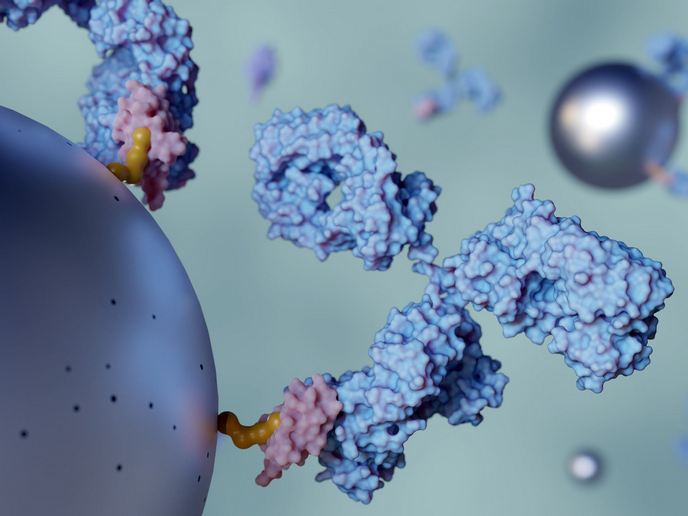
Active nanocatalysts often show great promise in the lab, but real-world success requires balancing efficiency with biocompatibility. An EU-funded project designed a new generation of smart nanozymes, viewing their chemical, magnetic and biological traits not in isolation but as a whole Iron-oxide-based magnetic nanozymes represent a new class of artificial enzymes that mimic natural enzymes beautifully, and they also retain the unique ability to be easily guided and recovered using external magnetic fields. However, predicting and controlling their selectivity, robustness, reproducibility and biological safety in real-world environments is challenging.
With funding from the Marie Skłodowska-Curie Actions programme, the NESTOR project was established to address this bottleneck. “Rather than simply synthesising different nanoparticle materials to optimise individual properties, we focused on learning how to engineer iron-oxide surfaces so that catalytic activity, magnetic response and biological safety could be controlled within a single material platform”, notes project coordinator Gerardo F. Goya.